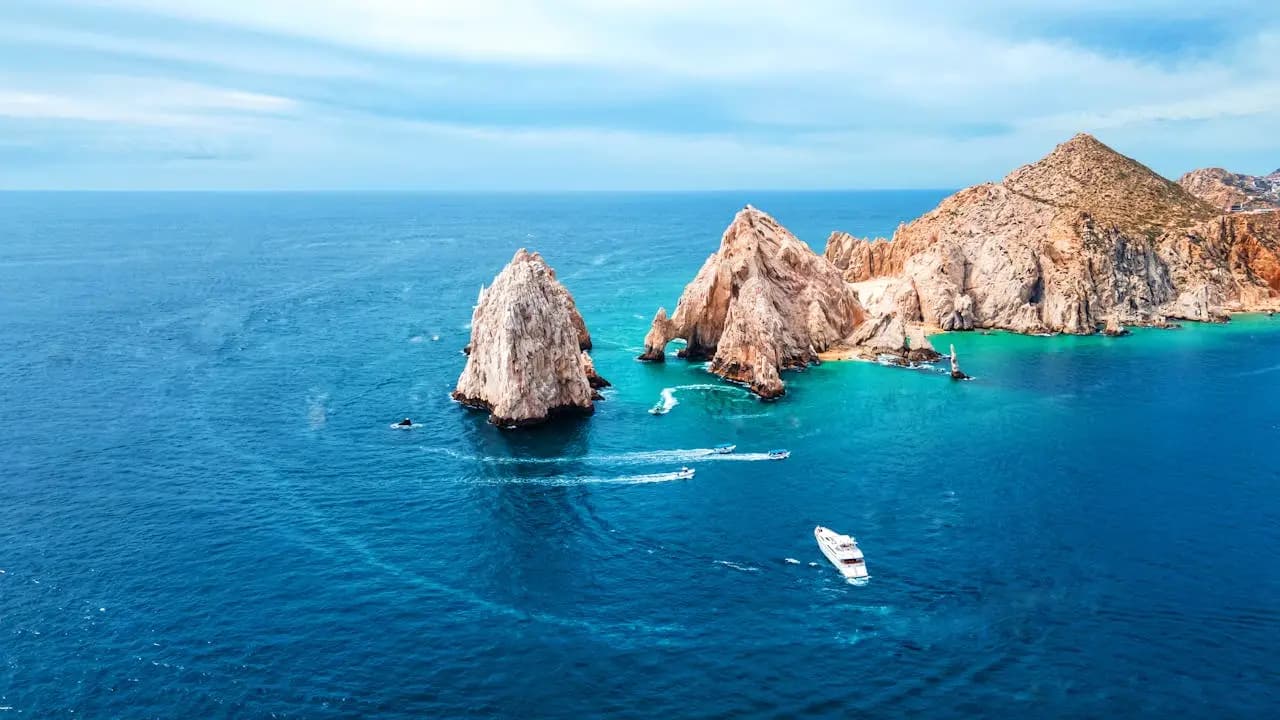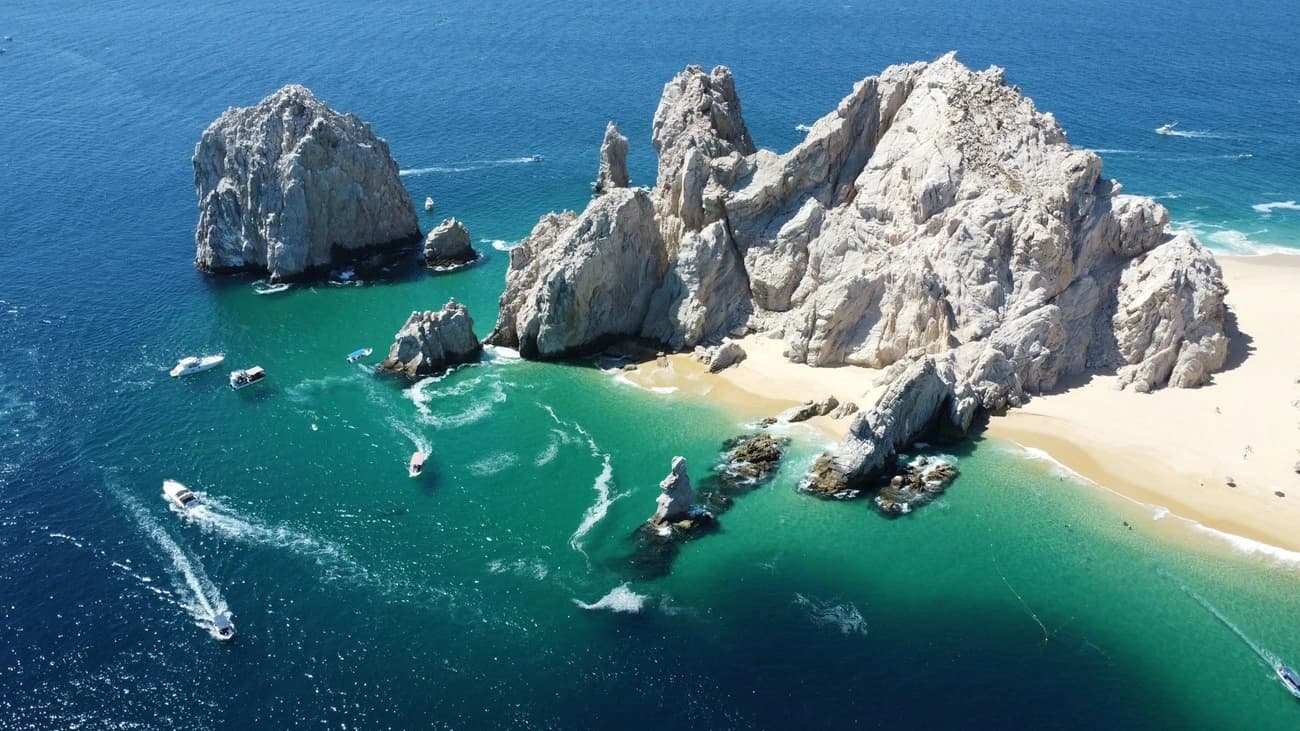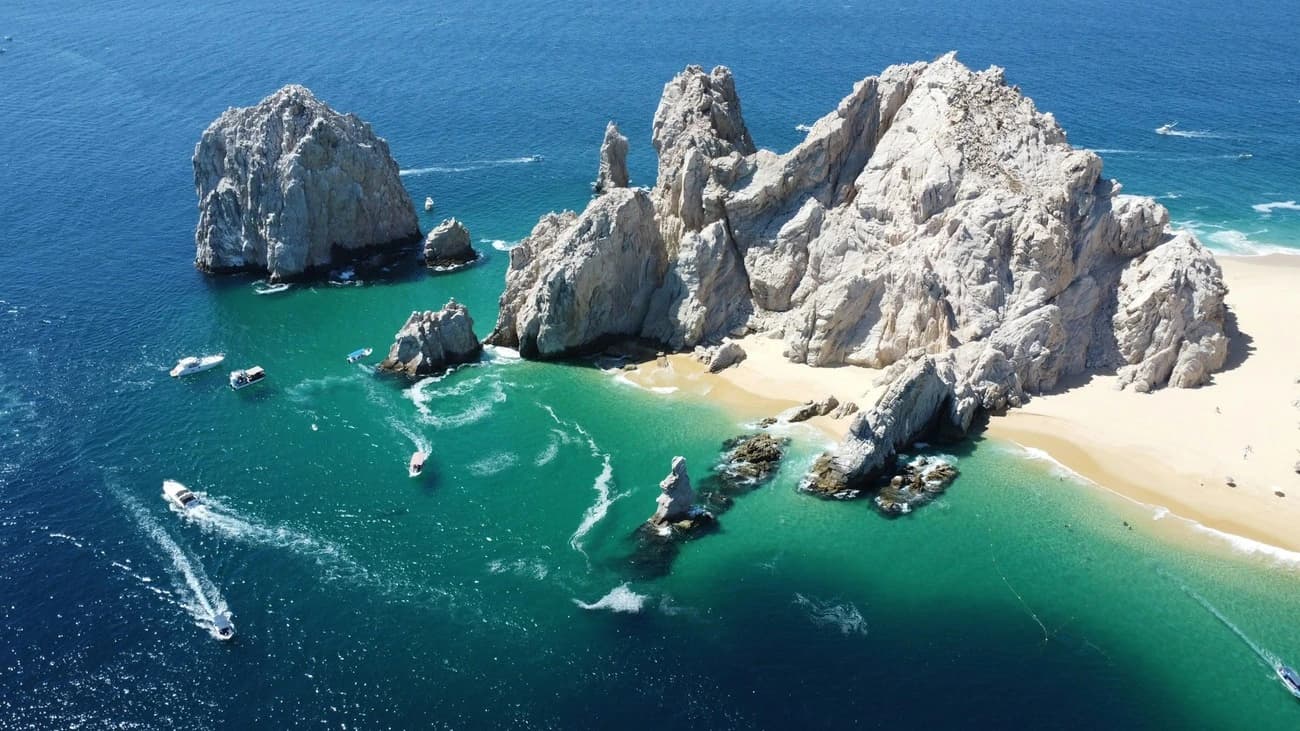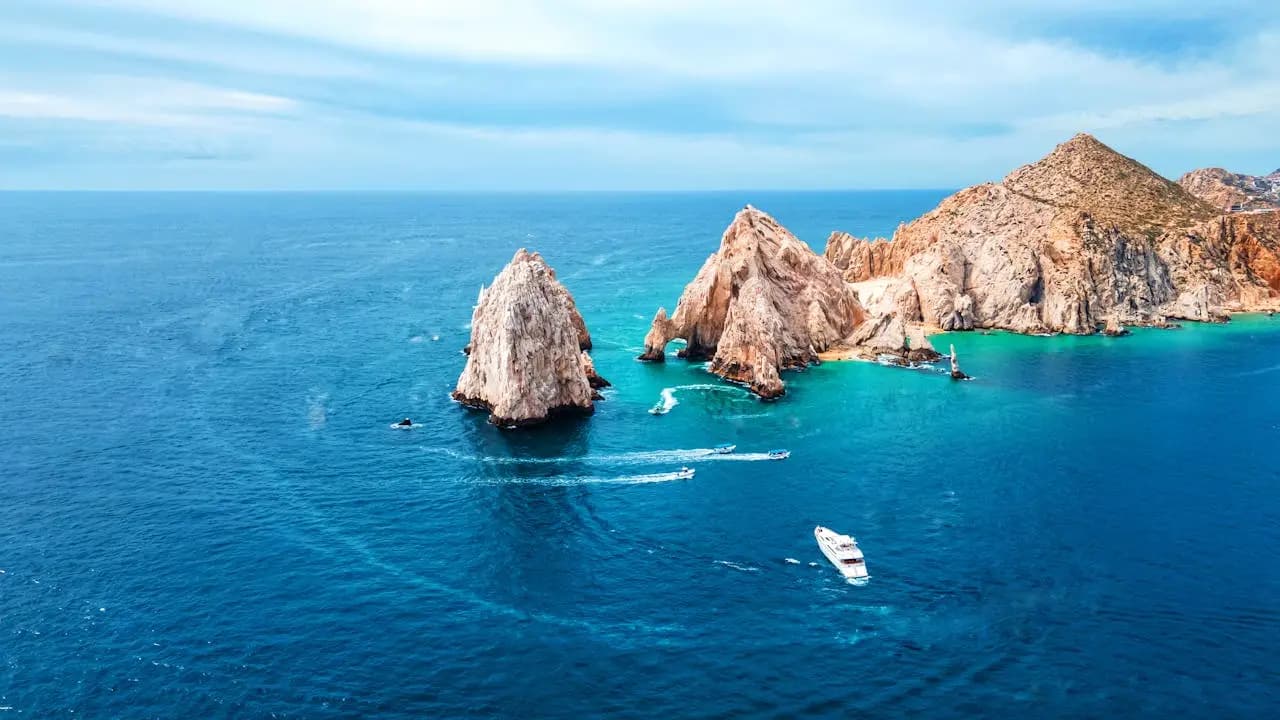
Cabo San Lucas in January means peak humpback whale season, dry sunny days, and the year's busiest, priciest weeks. Here's the weather, crowds, prices, and what's worth booking.
What You Should Know
- January is peak humpback whale season in Cabo San Lucas, with mother-calf pairs, frequent breaching, and consistently high sighting rates; it is one of the best months of the year to be on the water for whales.
- Weather is close to ideal: dry, sunny days around 27°C (80°F), low humidity, and almost no rain, but ocean water cools to 20–22°C (68–72°F), the coldest of the year for swimming and snorkeling.
- This is high season. The first days of January carry Christmas-holiday hangover pricing, crowds are at their yearly peak, and the best whale tours and hotels need booking 2–3 weeks ahead.
- Occasional north winds ('El Norte') can chop up the Pacific side and the open Sea of Cortez on a handful of January mornings, so booking boat tours with free cancellation gives you a weather buffer.
Cabo San Lucas in January: Is It Worth It?
⭐ Best January window: the second half of the month (Jan 14–31). Christmas and New Year crowds have cleared, hotel rates step down from their holiday peak, and humpback activity is at its strongest. You get peak-season whale watching without peak-holiday prices.
Cabo San Lucas in January is, for many travellers, the best version of Cabo there is. The desert is dry and sunny, daytime highs sit around a comfortable 27°C (80°F), humidity is low, and the Sea of Cortez fills with humpback whales. The trade-off is simple: everyone else knows this too. January is high season, crowds are at their peak, and the water is cold enough that swimming and snorkeling take a bit more commitment.
| Factor | January Rating |
|---|---|
| Weather | 10/10: dry, sunny, low humidity; the most comfortable month of the year |
| Crowds | 4/10: peak winter season; snowbirds, holidaymakers, and whale-watchers all overlap |
| Prices | 5/10: high-season rates, though below March and the Christmas weeks; the first days of January still ride holiday rates |
| Beaches | 8/10: beautiful and dry, but cool water and Pacific-side swell limit swimming at some beaches |
| Whale Watching | 10/10: peak season; mother-calf pairs, frequent breaching, very high sighting rates |
| Sportfishing | 6/10: slower than summer, but striped marlin and yellowtail are reliable winter targets |
| Nightlife | 8/10: marina bars and clubs run at full high-season energy |
| Families | 8/10: superb weather and whales for kids; the constraint is cost, not conditions |
| Couples | 9/10: ideal weather, whales, and sunset cruises; just book ahead |
💰 Average January hotel prices (Cabo San Lucas / Tourist Corridor, mid-range 4-star):
Early Jan (post-NYE, Jan 2–5): ~$198–250/night · Mid to late Jan (Jan 13–31): ~$184–190/night
Live median rates for the most-reviewed 4-star hotels in Cabo San Lucas and the Tourist Corridor (30 to 39 of 45 returned a rate each night), two adults, one night, pulled 20 October 2026. Room only, before taxes; rates for dates many months out are often placeholders.
So who is January for? We'd lean toward January for couples and wildlife travellers who care more about whales and weather than about beach swimming, and who can absorb high-season pricing. We'd book January if the whale watching calendar is the reason you're coming to Cabo at all, because no other month delivers it this reliably. We'd only steer you away from January if your trip is built around long ocean swims or budget value, in which case the May or November shoulder weeks serve you better. Most people don't realize the water is genuinely cool in January; the air feels like summer, but the Sea of Cortez does not.
Most Popular Tours
Compare and Book the Top Cabo Tours in January
These are six popular Cabo San Lucas tours, from two whale watching cruises for peak whale season, which runs mid-December through April, to desert ATV, camel and zipline outings and a snorkel catamaran. Compare live options below, then book January's pick, the luxury catamaran whale watching cruise, directly.
Cabo San Lucas Weather in January
| Metric | January |
|---|---|
| Avg High | 27°C (80°F) |
| Avg Low | 13°C (55°F) |
| Water Temp | 20–22°C (68–72°F) |
| Rain Days | ~1 |
| Rainfall | 6 mm (0.2 in) |
| Humidity | Low |
| Wind | Moderate (occasional north winds, "El Norte") |
| Hurricane Risk | None (season runs mid-May–November) |
Temperatures and rainfall are 1991 to 2020 normals for Mexico's Servicio Meteorológico Nacional station in Cabo San Lucas; water temperatures are typical values for the month.
Temperature and Humidity
January is the coolest month in Los Cabos, and that is a feature, not a flaw. Daytime highs settle around 27°C (80°F) with low humidity, which makes desert activities like ATV tours, camel rides, and zipline circuits far more comfortable than they are in the summer furnace. The catch is the overnight and early-morning drop: lows fall to around 13°C (55°F), so a light jacket for sunrise whale tours and evening cruises is genuinely useful. The biggest difference between January and the summer months is the dryness; the air is crisp rather than sticky.
Rain Pattern
There is essentially no rain. January sits in the heart of the dry season, averaging about one rainy day and roughly 6 mm (0.2 in) of rain for the entire month, and many years see none at all. Skies are clear, sunshine is dependable, and you can plan outdoor days without a weather contingency. This is the opposite of the September peak, when storms and humidity dominate.
Sea and Outdoor Conditions
The ocean is where January asks something of you. Water temperatures drop to 20–22°C (68–72°F), the coldest of the year, so snorkeling and diving are best done in a wetsuit, and casual beach swimming is brisk. On top of that, periodic north winds can build through the day, kicking up chop on the exposed Pacific side and the open Sea of Cortez. Mornings are reliably calmer than afternoons, which is one more reason every water tour in Cabo runs better early. What typically happens is that the wind builds after midday, so an 8–9 AM departure gives you the smoothest conditions and the best light.
Cabo Weather by Month: How January Compares
January sits at the heart of Cabo's best-weather stretch. Here is how it lines up against the rest of the year across the four factors that most shape a trip.
| Month | Weather | Water Temp | Whales | Crowds |
|---|---|---|---|---|
| January | Excellent (dry, mild) | Cool | Peak | Very high |
| February | Excellent (dry, mild) | Cool | Peak | High |
| March | Excellent, warming | Warming | Peak | High (spring break) |
| April | Warm | Warming | End of season | Moderate |
| May | Warm | Pleasant | None | Moderate |
| June | Hot | Warm | None | Low |
| July | Hot, humid | Warm | None | Moderate |
| August | Hot, humid | Warm | None | Moderate |
| September | Hot, humid, storm risk | Warmest | None | Low |
| October | Warm, easing | Warm | None | Low–moderate |
| November | Warm, dry | Pleasant | None | Moderate |
| December | Excellent (dry, mild) | Cooling | Season starts | High (late-month holidays) |
Crowds and Prices in January
January is firmly high season in Cabo, but it is not one uniform block. The month splits into two very different halves, and knowing which week you book changes both the price you pay and the crowds you fight.
- Week 1 (Jan 1–7): holiday peak hangover. The New Year crowd is still in town, rates on 2 January (~$250) are still well above the rest of the month, and the marina, beaches, and top tours are at their busiest. We'd only book this week if your dates are fixed by school or work calendars.
- Week 2 (Jan 8–15): the step-down. Holiday travellers clear out, hotel rates settle to the month's baseline, and tour availability opens up. Conditions are identical to the rest of the month, so this is where value starts to appear.
- Weeks 3–4 (Jan 16–31): the sweet spot. The quietest stretch of the month. Hotel rates hold flat at the January baseline, whale activity is at full strength, weather is settled, and you can often book quality tours a few days out rather than weeks ahead. Our take: this is the window to target if your dates are flexible.
In our live sample, mid-range 4-star hotels ran about $250/night on 2 January and $198 on 5 January, then held at roughly $184–190/night from 13 January to month's end, with luxury resorts and beachfront all-inclusives commanding well above that. That is clearly below the Christmas weeks (~$296–316) and mid-March (~$203–220). Flights from the US and Canada are also at winter-peak pricing, so booking both 6–8 weeks out is sensible. Our flights to Cabo San Lucas page compares live fares and nonstops by departure city. The single biggest saving lever in January is simply avoiding the first few days of the month.
Whale Watching in Cabo San Lucas in January
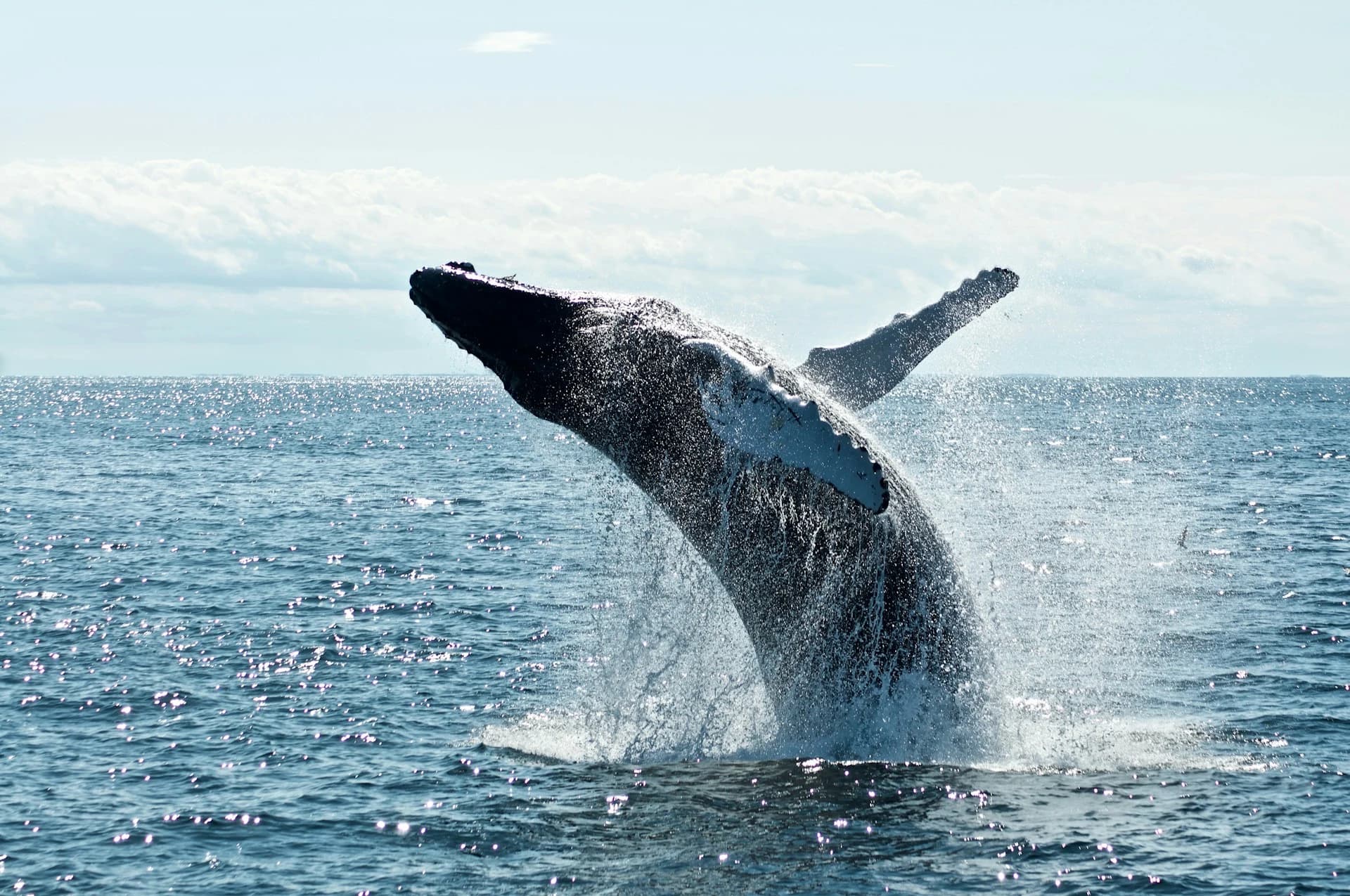
This is the headline. January is peak humpback whale season in Cabo San Lucas, one of the best stretches of the entire mid-December-through-April window. Thousands of humpbacks migrate into the warm waters off Baja to breed and calve, and by January the Sea of Cortez and the Pacific stretch around Land's End are full of them. Sighting rates on morning tours are extremely high, whale encounters are common, and on most days you will see multiple whales.
What makes January special is not just the numbers, it is the behaviour. This is when mother-calf pairs are commonly seen at close range, with calves breaching repeatedly as they build strength, plus tail-slapping, spy-hopping, and the occasional full breach from adults. Gray whales also pass through January–March en route to Baja's Pacific lagoons. In our view, the combination of density and surface activity is what separates a January tour from a December or April one.
Cabo Whale Watching Calendar
Humpback season in Cabo runs mid-December through April. Here is the month-by-month arc so you can see exactly where January falls.
| Month | Whale Activity |
|---|---|
| December | Season starts; humpbacks arriving and building through the month |
| January | Peak; mother-calf pairs and frequent breaching |
| February | Peak; often the strongest month for mother-calf sightings |
| March | Peak to very active; the easiest peak month to book last-minute |
| April | Declining; whales thinning out but still present early in the month |
- Panga (small open boat, 6–10 people): sits low and gets you close to whale level; the photographer's and wildlife-lover's choice. We'd lean toward a panga on calm mornings.
- Catamaran (15–30 people): wider, more stable, with shade and restrooms; far more comfortable on the choppier, windier January mornings. We think the tradeoff is closeness versus comfort, and in a north wind, comfort wins.
- Combo tours: several operators pair 1.5–2 hours of whale watching with a snorkeling stop at Pelican Rock or Chileno Bay; strong value, though the snorkeling leg means cold water in January.
For the full operator comparison, season detail, and what to expect on the water, see our complete Cabo San Lucas whale watching tours guide. We'd book January whale tours 2–3 weeks ahead, especially small-group pangas and anything over the first week of the month.
Most Popular Tours
January vs February in Cabo San Lucas: Which Is Better?
January and February are the two heavyweight months for a Cabo winter trip, and they are genuinely close. Both deliver dry, sunny days, cool water, and peak humpback activity. The differences are subtle, but they matter if your dates are flexible.
- Weather: near-identical. Both are dry and sunny with highs around 27°C (80°F) and cool mornings. February nudges very slightly warmer on average as the month goes on.
- Water temperature: both cool, around 20–22°C. Late February can feel marginally warmer, but neither month is a warm-water choice for swimmers.
- Whales: both are peak. February is often regarded as the strongest month for mother-calf sightings, while January brings vigorous early-season breaching and male escort behaviour. Most guests come away thrilled either month.
- Crowds and prices: this is the biggest difference. The first days of January still carry Christmas-holiday crowds and pricing, whereas February is steady high season without that spike; our October 2026 hotel sample showed no Presidents' Day premium in mid-February (~$168–186/night), and mid-to-late January and February both sit around $184–190/night.
Our take: if your dates are open, late January or early-to-mid February is the sweet spot, with peak whales and ideal weather, the holiday surge behind you, and spring break not yet arrived. We'd lean toward February for the calmest mix of crowds and conditions, and toward late January if you want vigorous early-season breaching; hotel rates in the two are almost identical.
January Trade-offs: North Winds and Cold Water
Every month in Cabo has a catch, and January's is the ocean. Two things separate a great January day from a frustrating one, and both are manageable once you know about them.
North Winds ("El Norte")
December through February is the window for north winds in Baja. They don't blow every day, but when they do, they build through the afternoon and chop up the exposed Pacific side and the open water beyond Land's End. The practical effect is rougher boat rides and the occasional weather-related tour cancellation. The fix is straightforward: book morning departures, when winds are lightest, and choose operators with free cancellation up to 24 hours out so a windy forecast costs you nothing. On a wind day, a stable catamaran is far more pleasant than a panga.
Cold Water
At 20–22°C (68–72°F), January water is the coldest of the year. It is perfectly swimmable for short stints, but most guests want a wetsuit for snorkeling or diving, and long beach swims are bracing rather than relaxing. Médano Beach, the main swimmable bay in Cabo San Lucas, stays calm and protected, so it remains the best bet for getting in the water. If beach swimming is central to your trip, the warmer shoulder months (May, October, November) suit you better; if whales and weather are the priority, the cold water is a minor price to pay.
Note that none of this is hurricane-related. Cabo's storm season runs mid-May–November, so January carries zero hurricane risk; the winter wind is a comfort issue, not a safety one.
Best Activities in Cabo San Lucas in January
| Activity | January Rating | Best Time of Day | Notes |
|---|---|---|---|
| Whale watching | 10/10 | Morning | Peak season; mother-calf pairs, frequent breaching, very high sighting rates |
| ATV desert tours | 9/10 | Morning | Cool dry air makes the desert far more comfortable than in summer |
| Camel ride & eco ranch | 9/10 | Morning | Pleasant temps; year-round tour at its most comfortable now |
| Zipline canyon circuit | 9/10 | Morning–midday | Clear, dry, great visibility; light layer for early starts |
| Tequila tasting | 9/10 | Any | Indoor and weather-proof; ideal on a windy afternoon |
| Pirate ship sunset cruise | 8/10 | Evening | Festive Land's End views; bring a jacket for the cool evening |
| Playa Balandra (La Paz) | 8/10 | Midday | Calm, shallow, protected bay; pleasant even with cooler water |
| Isla Espíritu Santo sea lions (La Paz) | 7/10 | Morning | Sea lion colony active year-round; wetsuit for the cold water |
| Snorkeling tours | 6/10 | Morning | Good visibility but cold water; a wetsuit makes it enjoyable |
| Scuba diving | 6/10 | Morning | Clear winter visibility; cooler water, so dress for it |
| Sportfishing (La Paz / Cabo) | 6/10 | Morning | Slower than summer; striped marlin and yellowtail are the winter catch |
| Hip hop boat party | 6/10 | Daytime | Fun year-round, but a party boat is livelier in warm summer weather |
What we'd prioritise in January
If you do one thing, do whale watching; January is the reason to be here. After that, January's cool, dry air is tailor-made for land adventures, so we'd give the edge to the desert activities: ATV tours, camel rides, horseback riding, and the zipline canyon circuit are all noticeably more pleasant now than in summer's heat. We like a tequila tasting as the perfect indoor backup for a windy afternoon. Water activities still deliver, but plan around a wetsuit and morning departures. For the complete menu of options, see our guide to the best things to do in Cabo San Lucas, and our Cabo San Lucas itinerary guide for sequencing it all across a trip.
Most Popular Tours
More January Activities Worth Booking
Beyond the headliners, a few experiences round out a January trip especially well, even if they don't have a dedicated guide on this site yet:
- Sunset catamaran cruise around El Arco: January's clear, dry evenings make for excellent light at Land's End. Bring a layer; the breeze cools quickly after sundown.
- Whale watching + snorkeling combo: the most efficient way to see whales and still get in the water, with the cold-water caveat that a wetsuit is worth it.
- San José del Cabo Art Walk: the Thursday-evening gallery district stroll runs in the cooler high season and is a relaxed, weather-proof evening option.
- Whale shark swim day trip to La Paz: January overlaps the La Paz whale shark season, so a Baja wildlife double-header (humpbacks in Cabo, whale sharks in La Paz) is genuinely possible on one trip. See our La Paz whale shark guide.
- Camel + ATV combo: a half-day that pairs two desert experiences; ideal in January's comfortable temperatures.
Most Popular Tours
Our Take
The one thing we'd tell every January visitor is to anchor the trip to a morning whale tour in the second half of the month and build everything else around it; that single decision gets you peak whale activity, the calmest seas, and post-holiday pricing all at once.
Tips for Visiting Cabo San Lucas in January
- Book whale watching 2–3 weeks ahead. January is peak season and the best small-group pangas and catamarans sell out, especially in the first week. Lock this in before hotels and other tours.
- Target the second half of the month if your dates flex. Jan 16–31 gives you identical whale activity and weather at lower prices and with smaller crowds than the holiday-hangover first days of the month.
- Pack a light jacket and layers. Mornings, evenings, and boat decks are cool in January, with overnight lows near 13°C (55°F). Daytime is warm, so you'll be peeling layers on and off.
- Bring or rent a wetsuit for water activities. At 20–22°C, snorkeling and diving are much more enjoyable with one. Most reputable operators include or rent them; confirm at booking.
- Choose morning departures for anything on the water. North winds build in the afternoon, so 8–9 AM tours are calmer, clearer, and better for both whales and seasickness-prone travellers.
- Book boat tours with free cancellation. On the handful of windy January days, free cancellation up to 24 hours out lets you move a tour at no cost rather than ride out rough seas.
- Reserve hotels and flights early. Winter-peak demand means the best mid-range properties and reasonable airfares go first; 6–8 weeks of lead time pays off.
- Adding Todos Santos in January? Our Todos Santos in January guide covers the Pacific side an hour north, where winter swell brings consistent surf and humpbacks are often visible right from the beach.
- Adding La Paz in January? Our La Paz in January guide covers the Sea of Cortez side farther north, where whale shark season is in full swing in the bay.
- Visiting at a different time of year? February is the other peak whale month and often the best for mother-calf pairs: see our Cabo in February guide for how the two compare, or our Cabo in December guide for the season's opening. Whale season runs mid-December through April, while the warmer shoulder months of May and November trade whales for warmer water and lower prices. Our complete Cabo whale watching guide has the full season breakdown.
Most Popular Tours
How We Put This Guide Together
The Cabo Tour Guides team built this January guide from long-run climate data for Los Cabos, humpback whale season records for the Sea of Cortez, and the booking and pricing patterns we track across local operators and hotels through the winter high season. Temperatures and rainfall are 1991 to 2020 normals for Mexico's Servicio Meteorológico Nacional station in Cabo San Lucas; water temperatures are typical values for the month. Hotel rates are live medians for the most-reviewed 4-star hotels in Cabo San Lucas and the Tourist Corridor, pulled 20 October 2026. Ratings reflect what actually shapes a January trip: peak whale activity, dry comfortable air, cold water, periodic north winds, and high-season crowds and prices. We weighed each activity on how its real-world conditions change in January rather than on its year-round reputation. Tour recommendations point to operators with verified booking records and strong review volume, with an emphasis on morning departures and free-cancellation flexibility that matter most during Cabo's windy winter mornings.
Frequently Asked Questions
Is Cabo San Lucas good in January?+
Yes. January is one of the best months to visit Cabo. The weather is dry, sunny, and comfortable at around 27°C (80°F), and it is peak humpback whale season with extremely high sighting rates. The trade-offs are high-season crowds, high-season prices, and cool ocean water around 20–22°C.
What is the weather like in Cabo San Lucas in January?+
January is the coolest, driest month. Daytime highs average about 27°C (80°F) with low humidity, lows drop to around 13°C (55°F), and rain is almost nonexistent at roughly one rainy day and 6 mm (0.2 in) all month. Occasional north winds can pick up in the afternoons.
Can you see whales in Cabo San Lucas in January?+
Yes, January is peak humpback whale season. The Sea of Cortez and waters around Land's End fill with humpbacks, including mother-calf pairs, with frequent breaching and tail-slapping. Morning tours spot whales on the large majority of days. Gray whales also pass through January through March.
Is Cabo warm enough to swim in January?+
You can swim, but the water is cool. In January the ocean sits around 20–22°C (68–72°F), the coldest of the year, so it is comfortable for short swims rather than long sessions. The protected Médano Beach is the warmest, calmest spot to get in. For snorkeling or diving, most guests are happiest in a wetsuit. The air, by contrast, is warm and sunny, so sunbathing and beach time are excellent.
Is January expensive in Cabo San Lucas?+
January is high season, but outside the first few days it is not the priciest stretch. In our live sample pulled in October 2026, mid-range 4-star hotels ran about $250/night on 2 January and $198 on 5 January, then held at roughly $184–190/night from mid-month, below mid-March (~$203–220) and well below the Christmas weeks (~$296–316). Flights are at winter-peak rates, so book early.
What is the best week to visit Cabo in January?+
The second half of the month, January 16–31, is the sweet spot. Christmas and New Year crowds have cleared, hotel rates step down from their holiday peak, and humpback whale activity is at full strength, so you get peak-season conditions at lower prices.
What activities are best in Cabo in January?+
Whale watching is the standout. Beyond that, January's cool, dry air is ideal for desert activities like ATV tours, camel rides, and ziplining, plus tequila tastings and sunset cruises. Water activities such as snorkeling and diving still deliver but are best done in a wetsuit and on morning departures.
Is there a hurricane risk in Cabo San Lucas in January?+
No. Cabo's hurricane and storm season runs mid-May through November, peaking in August and September. January carries zero hurricane risk. The only winter weather variable is occasional north winds, which can chop up the water on some afternoons but are a comfort issue, not a safety one.
Affiliate note: Some links on this page are affiliate links. If you book through them, we may earn a small commission at no additional cost to you.