Whale watching tours in Cabo San Lucas run December–April: this guide shows the best tours, what you'll actually see, and how to choose the right operator.
What You Should Know
- Humpback whale watching season in Cabo San Lucas runs mid-December through April; January and February are peak months for mother-calf pairs, breaching, and close surface activity.
- Most shared tours run 2–3 hours departing 8–9 AM from Marina Cabo San Lucas; combo tours that add snorkeling at Pelican Rock or Chileno Bay run 4–5 hours.
- Prices range from $75 USD (small-group shared) to $129+ USD (luxury catamaran with hotel pickup, drinks, and hydrophone); sighting probability is 90–95% during peak season.
- The panga vs. catamaran choice matters: pangas sit lower and get closer to pods; catamarans are significantly more stable in the winter chop and better for anyone prone to seasickness.
Whale Watching in Cabo San Lucas
Cabo San Lucas whale watching tours put you on the Sea of Cortez during one of the most concentrated humpback whale migrations on the Pacific coast, from mid-December through April, hundreds of whales pass through or take up residence in these waters to breed and give birth. Choosing the right tour comes down to boat type, group size, and departure timing, and this guide covers all three, along with what to expect on the water and what it actually costs.
The Sea of Cortez isn't just a migration corridor here. It's a nursery. January through March, it's common to see mother-calf pairs at close range, calves breaching repeatedly as they build strength. You can also combine your time on the water with a snorkeling tour at Pelican Rock or Chileno Bay on the same day. If you're still planning your full trip, see our guide to the best things to do in Cabo San Lucas for a complete overview of activities, or our Cabo San Lucas itinerary guide for day-by-day trip frameworks.
Whale Watching Season in Cabo San Lucas
The season runs mid-December through April. Humpbacks are the primary draw, with gray whales also passing through January–March en route to Baja's Pacific lagoons. Outside this window, sightings drop significantly, as blue whales and fin whales are occasionally spotted year-round but tours are not reliably marketed outside the peak window.
Morning departures (8–9 AM) consistently outperform afternoon tours, as seas are calmer and whale activity tends to be higher before midday heat.
Highest whale density, frequent mother-calf pairs, most sightings per hour. Book 2–3 weeks ahead during this window.
Solid sightings, smaller crowds, slightly lower prices. March is the easiest month to get a last-minute spot.
Whales thinning out but still present. Morning tours give the best odds this late in the season.
Best Whale Watching Tours in Cabo San Lucas
Most whale watching tours in Cabo San Lucas depart from Marina Cabo San Lucas and split into two meaningful types: shared catamarans (12–25 passengers) and smaller panga-style boats (6–10 passengers). Each suits different priorities.
Small-Group Panga Tours
Pangas are the locals' choice. These open, motorized skiffs sit low on the water, which means you're closer to whale level when a humpback surfaces alongside the boat. Group sizes of 6–10 make for a quieter experience and more flexible positioning around whale pods. Best for photographers and wildlife-focused travellers.
Check availabilityCatamaran Whale Watching Tours
Catamarans are the better call in January and February when the Sea of Cortez is at its choppiest: wider hulls, shade, restrooms, and above-water sightlines make rough-water mornings far more manageable. The trade-off is group size (15–25 passengers) and a fixed route: when a pod goes the wrong direction, catamarans don't chase.
Check availabilityWhale Watching + Snorkeling Combo Tours
Several operators combine a 1.5–2 hour whale watching segment with a snorkeling stop at Pelican Rock or Chileno Bay on the return. We'd give these the edge for value: two distinct experiences for a price close to a whale watching-only tour. See our snorkeling guide for what to expect at each site.
Private Whale Watching Charters
Private charters matter most when whale activity is scattered, as the captain can stay with a pod as long as conditions allow instead of keeping pace with a shared-route schedule. They're also the only option if you want to target a specific area, like the shallower waters off Cabo Pulmo where blue whales occasionally appear.
Check availabilityCabo Adventures
This is our top recommendation based on inclusions, reviews, and value. Luxury catamaran with hotel pickup, alcoholic beverages, snacks, and a hydrophone to hear whale song; daily seasonal departures and the highest review volume in this category.
Book NowBest Cabo San Lucas Whale Watching Operators: Side-by-Side Comparison
| Operator | Price | Rating | Ages | Capacity | Duration | Days | Transport | Food | Extras |
|---|---|---|---|---|---|---|---|---|---|
| Top Rated Cabo Adventures Book Now |
From $129 | 4.9 ⭐ (2,274 reviews) Read Reviews |
Ages 5+ | Max 30 | 2.5 hours | Daily (seasonal) | Yes | Snacks | Luxury catamaran, alcoholic beverages, hydrophone |
| Top Rated Cabo Nature Book Now |
From $99 USD | 5.0 ⭐ (2,129 reviews) Read Reviews |
Ages 6+ | Max 10 | 2 hours | Daily (seasonal) | No | Water | Free photos included |
| Top Rated Whale Watch Cabo Book Now |
From $109 USD | 4.9 ⭐ (1,249 reviews) Read Reviews |
All ages | Max 12 | 2.5 hours | Daily (seasonal) | No | No | Free photos |
| BAJA SNORKEL Book Now |
From $115 | 4.7 ⭐ (30 reviews) Read Reviews |
All ages | N/A | 2.5 hours | Daily (seasonal) | Optional pickup | Mexican buffet lunch/dinner | Open bar |
| Cabo Nature | From ~$80–$100 | 5.0 ⭐ (288 reviews) | All ages | Small groups | ~2–3 hours | Daily (Dec–Apr) | Not included | Not included | All-female crew, eco-focused, hydrophone |
| CaboTrek | From ~$90 | 4.9 ⭐ (530 reviews) | All ages | Small groups | ~2–3 hours | Daily (Dec–Apr) | Not included | Not included | Marine biologists, eco-certified |
| Whale Watch Cabo | $79–$109 | 4.8 ⭐ (621 reviews) | Ages 5+ | ~12 max | ~2.5 hours | Daily (Dec–Apr) | Optional shuttle | No | Biologists, hydrophone, free photos |
| Cabo Adventures | From ~$76–$97 | 4.8 ⭐ (18,616 reviews) | Ages 5+ | Medium–large | ~2–3 hours | Daily (seasonal) | Yes | Snacks & drinks | Luxury boats, large operator |
| Cabo Expeditions | From ~$75–$95 | 4.5 ⭐ (447 reviews) | All ages | Medium groups | ~2–3 hours | Daily (seasonal) | Not included | Not included | 15+ years experience, multi-activity |
ℹ️ All tours and information were personally reviewed by our team on April 8, 2026. Prices and availability may change — always confirm with the operator before booking.
Most Popular Tours
What to Expect on a Cabo San Lucas Whale Watching Tour
Whale watching tours in Cabo San Lucas follow a consistent format. Here's the typical sequence:
- 018–9 AM
Hotel pickup or marina meeting point
Most shared tours depart from Marina Cabo San Lucas between 8–9 AM. Some operators offer hotel pickup; others ask you to meet at a specific dock. Confirm your departure point at booking.
- 02Check-in
Check-in and boarding
Arrive 15–20 minutes early. You'll check in with the guide, receive a brief safety orientation, and be shown to your seating. Life jackets are distributed before departure.
- 0315–30 min
Transit to the whale zone
Most boats head southeast toward the Sea of Cortez corridor off the East Cape, or loop around Land's End. Travel time to active whale areas is typically 15–30 minutes.
- 0445–90 min
Active whale time
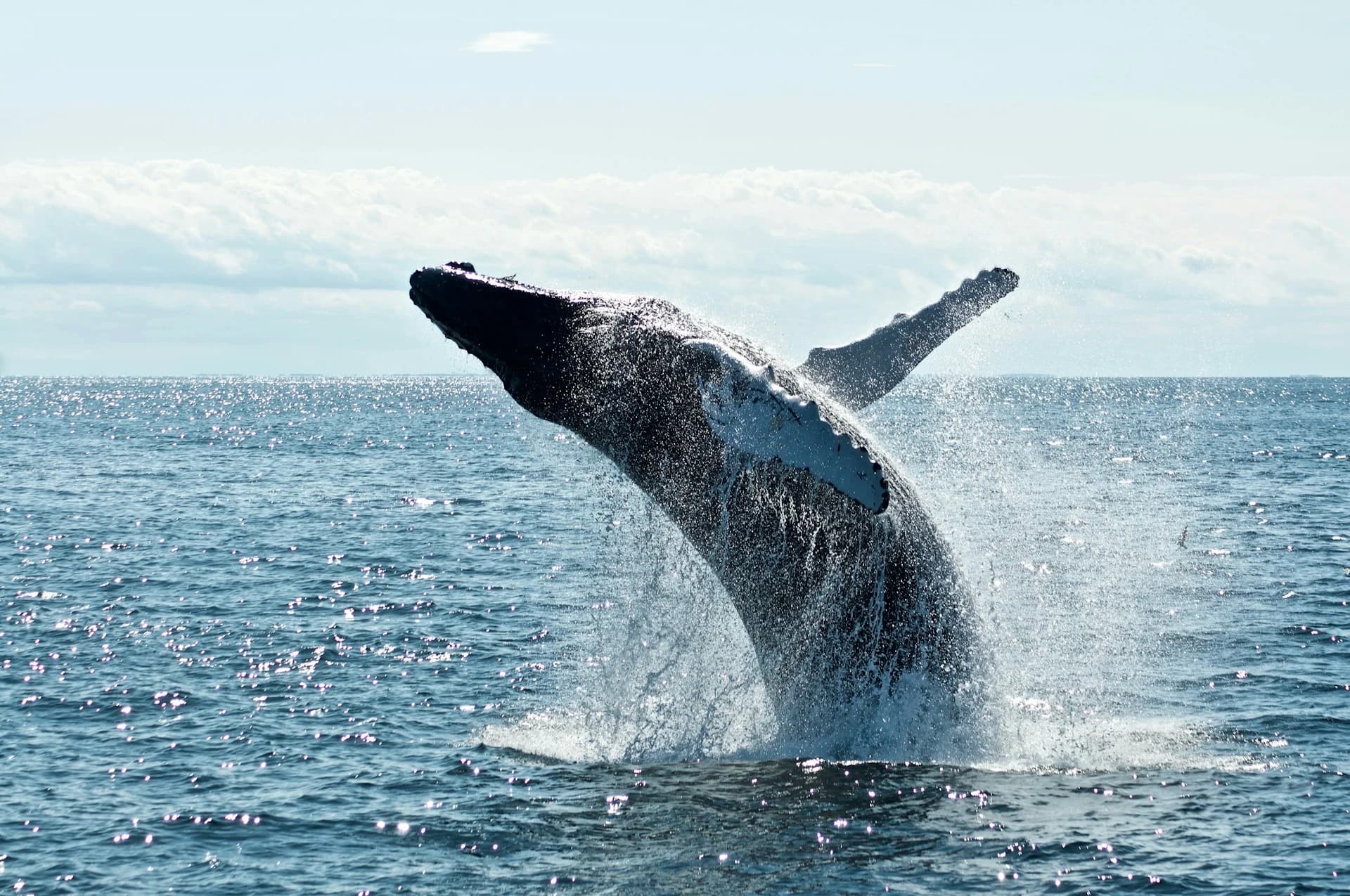
Guides follow SEMARNAT regulations: boats stay at least 50 metres from whales and engines are cut to idle near pods. Expect 45–90 minutes in the whale zone depending on activity. Humpbacks frequently breach, spy-hop, and tail-slap unprompted in peak season.
- 052–3 hrs in
Return to the marina
Back at the marina 2–3 hours after departure. Combo tours continue to a snorkeling site before returning.
- 01
Hotel pickup or marina meeting point
Most shared tours depart from Marina Cabo San Lucas between 8–9 AM. Some operators offer hotel pickup; others ask you to meet at a specific dock. Confirm your departure point at booking.
8–9 AM - Check-in02
Check-in and boarding
Arrive 15–20 minutes early. You'll check in with the guide, receive a brief safety orientation, and be shown to your seating. Life jackets are distributed before departure.
- 03
Transit to the whale zone
Most boats head southeast toward the Sea of Cortez corridor off the East Cape, or loop around Land's End. Travel time to active whale areas is typically 15–30 minutes.
15–30 min - 45–90 min04
Active whale time
Guides follow SEMARNAT regulations: boats stay at least 50 metres from whales and engines are cut to idle near pods. Expect 45–90 minutes in the whale zone depending on activity. Humpbacks frequently breach, spy-hop, and tail-slap unprompted in peak season.
- 05
Return to the marina
Back at the marina 2–3 hours after departure. Combo tours continue to a snorkeling site before returning.
2–3 hrs in
Seasickness is the main variable. Winter mornings in the Sea of Cortez can be choppy, so if you're susceptible, take medication the night before and sit near the middle of the boat. Most catamarans are more stable than pangas in a swell.
Cabo San Lucas Whale Watching: See It Before You Go
Get a feel for what a whale watching tour in Cabo San Lucas is actually like: humpbacks breaching, the Sea of Cortez up close, and what to expect on the water.
How Much Do Whale Watching Tours in Cabo San Lucas Cost?
Shared cabo san lucas whale watching tours typically run $75–$130 USD per person. Private charters and combo tours sit higher. Here's what each tier gets you:
Small-group panga or shared catamaran, 2–2.5 hours on the water. Operators like Cabo Expeditions ($75–$95), Cabo Nature ($99, free photos, max 10), and Whale Watch Cabo ($109, free photos, max 12) fall here. Reliable sightings with a knowledgeable guide: this is the sweet spot for most travellers.
Higher-rated shared tours with more inclusions: naturalist guide, snacks or drinks, and often a sighting guarantee or free return. BAJA SNORKEL's listing ($115) includes a Mexican buffet and open bar. CaboTrek also falls here, with strong eco-credentials and marine biologist guides.
Cabo Adventures starts at $129 and includes hotel pickup, alcoholic beverages, and a hydrophone so you hear the whales as well as see them. Private charters run $150–$200+ with full itinerary flexibility.
In our experience, most visitors get the best experience in the $99–$115 range: small group, free photos or naturalist guide, and a sighting guarantee cover everything that matters. The $129 Cabo Adventures option is worth the premium if inclusions (open bar, hydrophone, hotel pickup) are important to you.
Cabo San Lucas Boat Tours: Combining Whale Watching with Other Activities
Because most whale watching tours Cabo San Lucas depart from Marina Cabo San Lucas and return by mid-morning, afternoons are genuinely free, which is why land-based combos work better here than at most destinations. A few combinations worth the extra planning:
- Whale watching + snorkeling: The most popular combo. You watch whales in the morning, then the boat moves to Pelican Rock or Chileno Bay for an hour of snorkeling on the return. See the snorkeling guide for what each site is like.
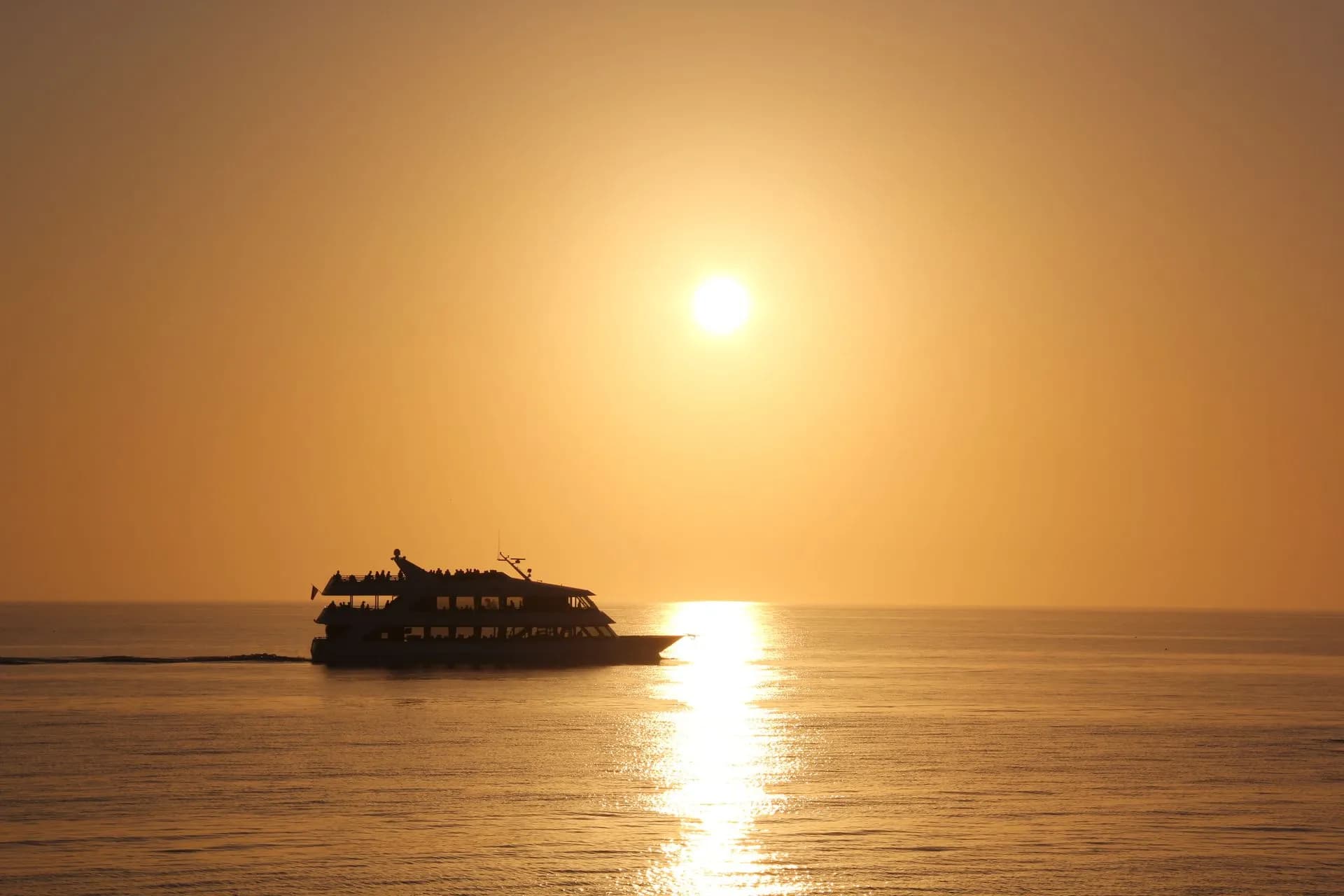
- Whale watching + sunset cruise: Morning whale watching followed by an evening sunset cruise around Land's End: an efficient use of a full day on the water.
- Whale watching on a private charter: Instead of a shared boat, charter a private yacht and have the captain detour toward whales when they surface, with the deck to your group alone. See our Cabo yacht charter guide.
- Whale watching + glass bottom boat: Cap a morning whale tour with a short glass bottom or clear boat ride to El Arco, a quick, dry way to see Land's End and the sea lions up close.
- Full land + sea day: Some packages combine a morning whale watching departure with an afternoon ATV tour or camel ride. These full-day adventures are common through multi-activity operators in Cabo.
- Whale watching + whale sharks (La Paz): For the ultimate Baja wildlife trip, pair a Cabo whale watching tour with a separate day trip north to La Paz to swim with whale sharks. Both seasons overlap November–March, giving you two completely different encounters on the same visit.
Tips for Whale Watching in Cabo San Lucas
- Book January–February tours 2–3 weeks ahead. Peak season fills fast, especially for small-group pangas and private charters. March is easy to book last-minute. April tours still produce sightings, with rays, dolphins, and mother-calf pairs all spotted late in the season.
- Hotel pickup is typically included: confirm at booking. Most catamaran tours include door-to-door transport. Pickup runs on a tight schedule, so be ready at the stated time. The logistics are smooth when you're prepared; the only hiccup guests mention is missing the van window.
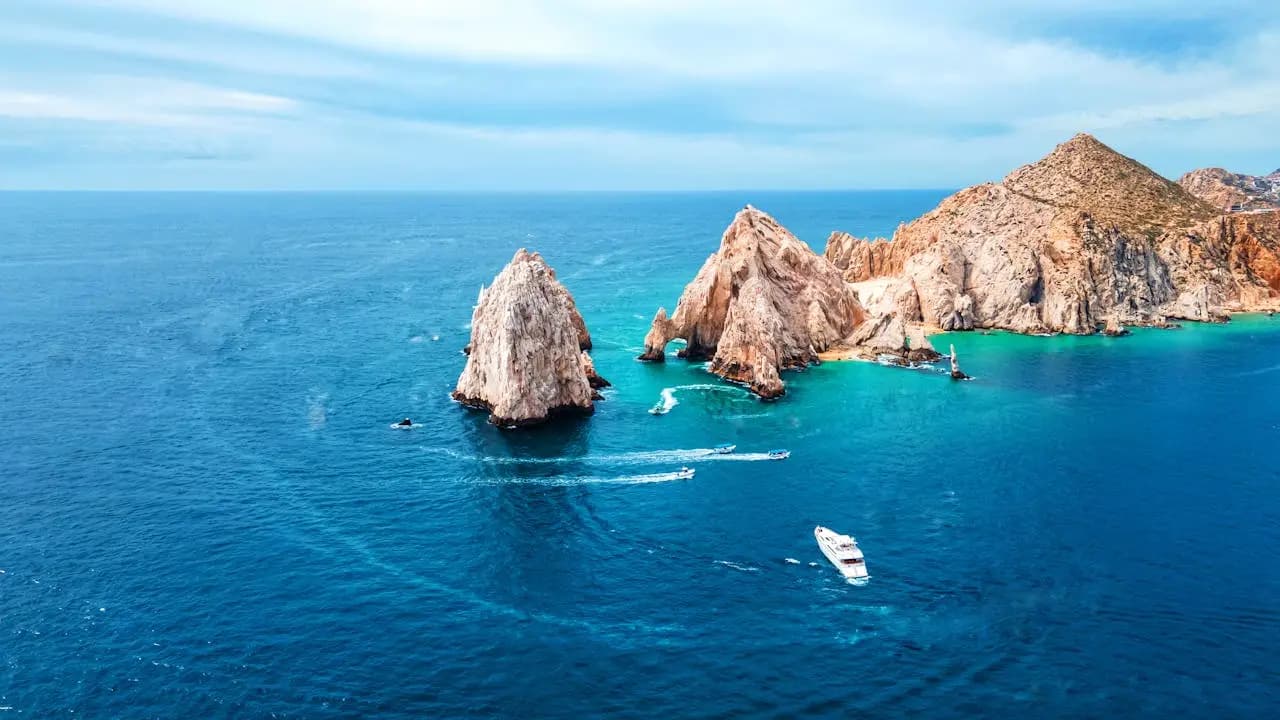
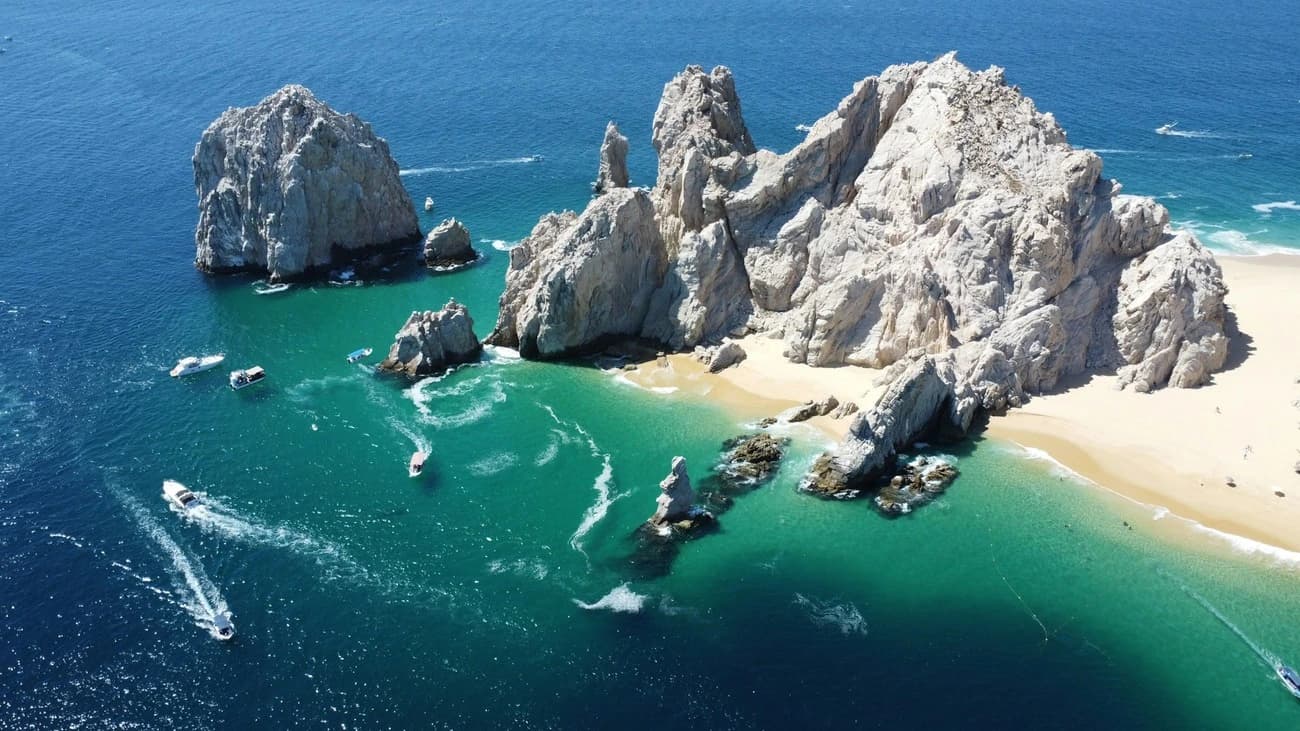
- The tour usually stops at El Arco for photos. Most routes pause at the famous rock arch on the way out or back. Bring your camera ready: it's a brief stop and the light can be good in the morning.
- Bring sunscreen and a jacket. The open water sun is intense even on overcast days, and multiple guests flag sunburn as a surprise. Wind and spray on the return can also make it noticeably cooler, even in winter. A packable layer and reef-safe sunscreen cover both.
- Whale proximity varies, so patience is part of the experience. Most guests get close encounters, but some mornings whales surface at a distance. The crew reads conditions and repositions throughout, so don't plant yourself on one side early and miss a sighting on the other.
- Panga vs. catamaran matters more than brand. Pangas get you lower and closer; catamarans are more comfortable in chop and typically include better food and drink service. We'd give the edge to pangas for photographers and catamarans for anyone who gets seasick.
- Motion sickness medication the night before. Not the morning of, since most medications need time to take effect. Dramamine and Bonine are available at Cabo pharmacies. The catamaran is surprisingly smooth for many guests, but open water in January–February can be choppy.
- Bring a zoom lens or a good phone camera. Breaches happen fast, so keep it in your hands, not your bag. A dry bag is worth packing; spray from whale blows is real.
- Visiting in January? January is peak humpback season in Cabo, with mother-calf pairs and very high sighting rates; our Cabo San Lucas in January guide covers the best weeks, weather, and what to book.
- Visiting in February? February is the other peak month and often the best for mother-calf sightings; our Cabo San Lucas in February guide covers conditions, crowds, and how it compares to January.
- Visiting in March? March is the last full peak month and the easiest to book last-minute; our Cabo San Lucas in March guide covers whales, spring break, and warming water.
- Visiting in April? April is the close of whale season, with good sightings early in the month; our Cabo San Lucas in April guide covers timing, warm water, and the Easter crowd.
- Visiting in December? December opens whale season, with the first arrivals building from mid-month; our Cabo San Lucas in December guide covers season timing and the holidays.
- Mobility note: The catamaran moves continuously and railings on some boats are low. Older guests or anyone with limited mobility should confirm the boat layout with the operator before booking.
Most Popular Tours
How We Selected These Tours
The Cabo Tour Guides team evaluated whale watching tours on sighting track record, boat type, group size, and how well each operator balances close whale access with comfort during choppy winter conditions in the Sea of Cortez. Every listing is a verified booking with a strong review volume. We removed operators with inconsistent pickup logistics, unclear sighting guarantees, or overcrowded boats. The selection covers premium catamarans with full inclusions, small-group pangas for photographers, budget options with free photos, and upper-mid tours with open bar and buffet.
Frequently Asked Questions
What months are best for whale watching in Cabo San Lucas?+
January and February are peak months, with the highest concentration of humpbacks, including mother-calf pairs. The full season runs mid-December through April. March is good and easier to book last-minute.
How long are whale watching tours in Cabo San Lucas?+
Shared tours run 2–3 hours. Combo tours that include snorkeling run 4–5 hours. Private charters are flexible, typically booked for 3–4 hours minimum.
Do whale watching tours in Cabo guarantee sightings?+
Many reputable operators offer a sighting guarantee: if no whales are spotted, you get a free return trip. Confirm the exact policy before booking. In peak season (January–February), sightings on any given morning are nearly certain.
Is a panga or catamaran better for whale watching in Cabo?+
Pangas (small open boats, 6–10 people) sit lower on the water and get closer to whale pods, making them better for photography and wildlife-focused travellers. Catamarans are more stable in chop and better for anyone prone to seasickness. Both see the same whales.
Can I combine whale watching with snorkeling in Cabo?+
Yes, several operators run combo tours that include whale watching followed by a snorkeling stop at Pelican Rock or Chileno Bay. These 4–5 hour tours are excellent value and among the most popular Cabo boat tours.
Is whale watching in Cabo San Lucas safe?+
Yes. Tour operators follow SEMARNAT regulations for responsible whale watching, including minimum approach distances and engine protocols near whale pods. Life jackets are required on all boats. Book with a Viator-verified operator to ensure regulated guides.
What whales can I see in Cabo San Lucas?+
Humpback whales are the main attraction from December through April, known for breaching and surface activity. Gray whales pass through January–March. Blue and fin whales are occasionally spotted year-round but are not reliably targeted by tours.
How much do whale watching tours in Cabo San Lucas cost?+
Shared tours run $75–$130 USD per person depending on boat type and inclusions. Budget-friendly options from Cabo Expeditions and Cabo Nature start around $75–$99. Cabo Adventures starts at $129 and includes hotel pickup, drinks, and a hydrophone. Private charters run $150–$200+.
Affiliate note: Some links on this page are affiliate links. If you book through them, we may earn a small commission at no additional cost to you.