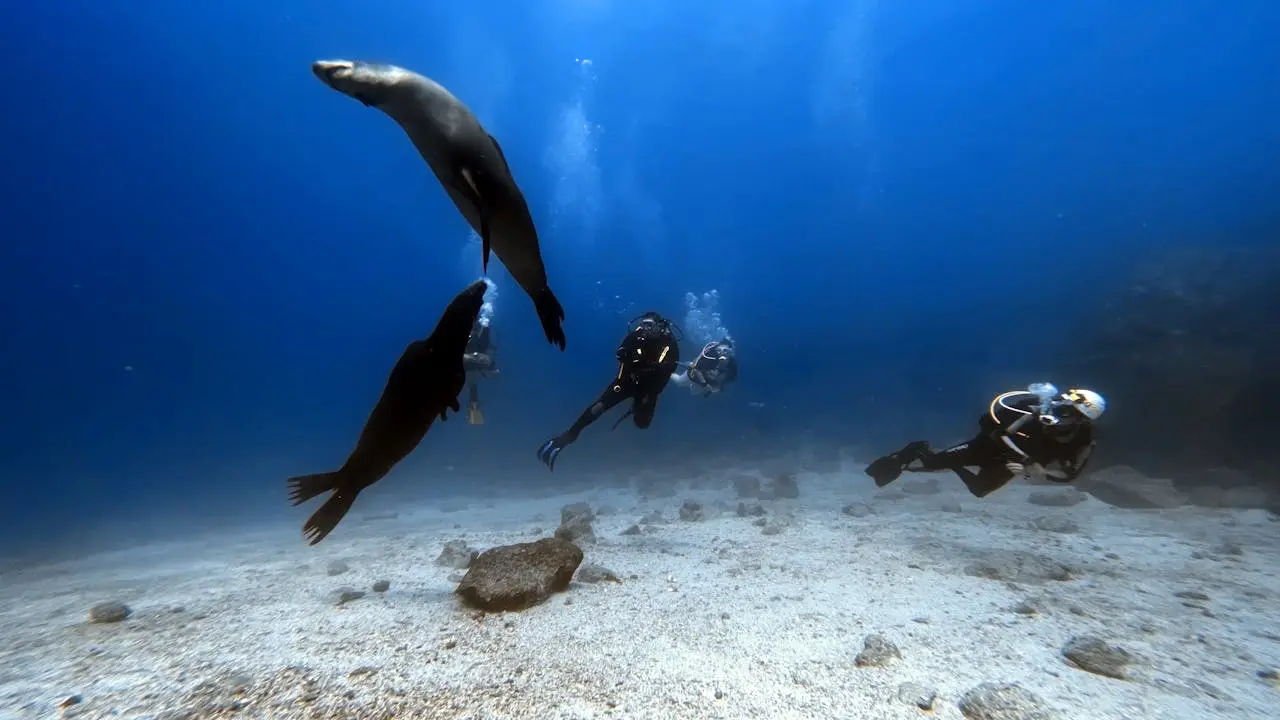
Compare the best Cabo San Lucas scuba diving, from certified 2 and 3-tank dives at Land's End to beginner Discover Scuba and private boats, all in the Cabo San Lucas Marine Park and Corridor.
What You Should Know
- Cabo scuba diving is concentrated in the Cabo San Lucas Marine Park around Land's End, a short boat ride from the marina; sites like Pelican Rock and Neptune's Finger mix reef, walls, the famous sand falls, and a resident sea lion colony.
- There are two paths: certified divers (Open Water and up) book 2-tank or 3-tank trips, while complete beginners book a Discover Scuba experience with an instructor, no certification or prior experience needed.
- Prices run about $129 to $210 per person for shared trips; private dive boats start around $545 for up to four, and a specialty shark dive runs higher. Most certified trips are half-day, while the 3-tank is a full day.
- Water is warmest and clearest from roughly August through November, around 78 to 85°F with strong visibility; winter is cooler and a little murkier but still diveable, and the famous Cabo Pulmo reef is a separate, longer day trip.
Scuba Diving in Cabo San Lucas
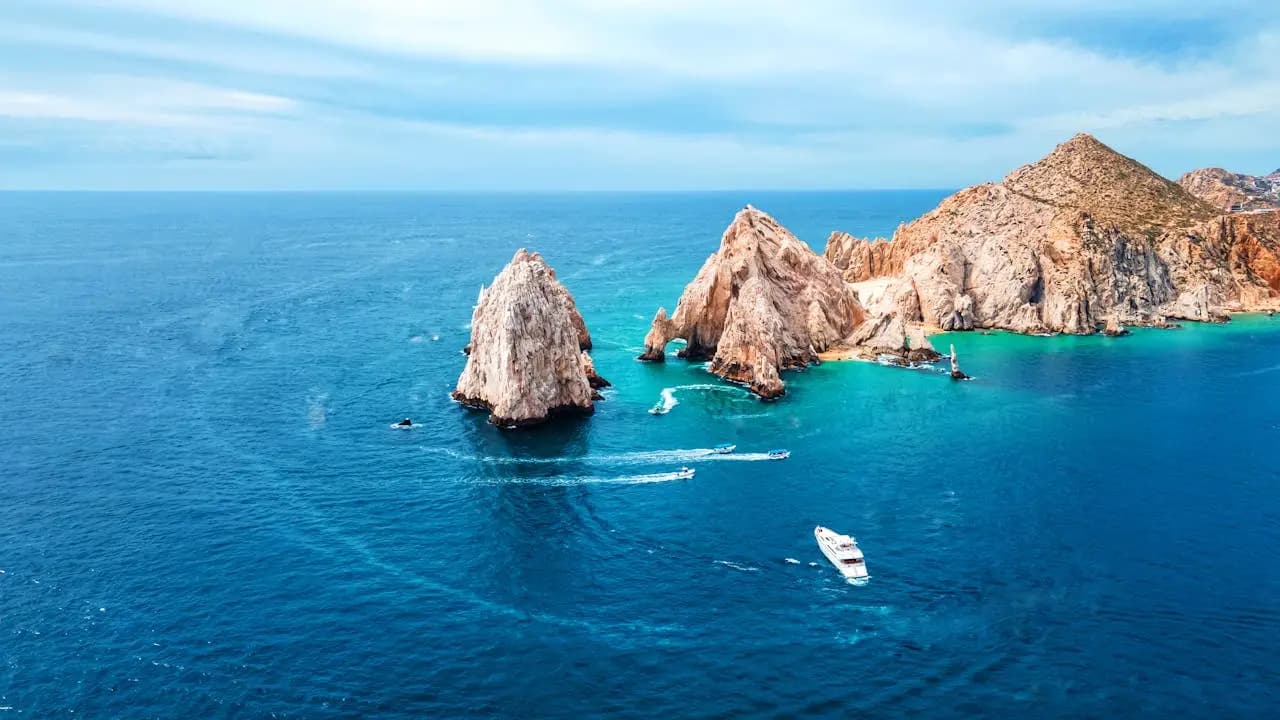
Scuba diving in Cabo, Mexico is unusually convenient: the main dive sites sit inside the protected Cabo San Lucas Marine Park right around Land's End and El Arco, a 5 to 15 minute boat ride from the marina, so you can dive in the morning and still have your afternoon free. The Sea of Cortez here mixes rocky reef, dramatic walls, the famous underwater sand falls, schooling fish, rays, turtles, and a year-round sea lion colony, with bigger animals like mobula rays and sharks showing up seasonally.
This guide compares the main Cabo San Lucas scuba diving operators and trips side by side, so you can match the right dive to your experience level, budget, and dates. The first thing to decide is simple: are you a certified diver, or a first-timer? Certified divers (Open Water and up) choose between shared 2-tank and 3-tank trips, private boats, and a specialty shark dive, while complete beginners book a Discover Scuba experience and dive with an instructor the same day. For more ways to get in the water, see our Cabo snorkeling guide and our overview of the best things to do in Cabo San Lucas.
The best scuba diving in Cabo for most certified divers is Manta's 2-Tank Marine Reserve dive, the highest-volume certified trip here (4.9 across 278 reviews) at $142 per person. Beginners are best served by a Discover Scuba experience: Manta's is the best-reviewed ($142, 4.9), while Cabo Adventures' Learn to Scuba is the cheapest from a big operator ($129). For a private boat, Cabo Private Guide runs the top-rated option (5.0) from $545 per group of up to four.
Our picks at a glance:
- Best value, certified: Manta, 2-Tank Marine Reserve Dive
- Most dives in a day: Manta, 3-Tank Reserve and Corridor
- Best-reviewed beginner intro: Manta, Discover Scuba Experience
- Best private boat: Cabo Private Guide, Private Dive Boat
- Specialty: Shark Guided Diving Los Cabos (advanced)
Manta: 2-Tank Cabo San Lucas Marine Reserve Dive
The most-reviewed certified dive trip in Cabo at 4.9 across 278 reviews: two tanks in the Cabo San Lucas Marine Park around Land's End with guide and gear, from a long-running local dive operator, at a strong per-dive price.
Book NowBest Cabo San Lucas Scuba Diving: Side-by-Side Comparison
Ten trips cover scuba diving in Cabo San Lucas, split between certified dives and beginner Discover Scuba experiences. Certified trips (rows 1 to 6) need an Open Water card or higher; the beginner experiences (rows 7 to 10) need no certification at all. Prices below are the per-person from-price unless noted; the private boat is priced per group.
| Operator / Tour | Price (from) | Online Rating | Dives | Level | Dive Sites | Best For |
|---|---|---|---|---|---|---|
| Top Rated Manta 2-Tank Marine Reserve Dive Book Now |
$142 pp | ⭐ 4.9 (278) | 2 tanks | Certified | Marine Park (Land's End) | Best-value certified dive |
| Manta 3-Tank Reserve & Corridor Book Now |
$210 pp | ⭐ 4.9 (200) | 3 tanks | Certified | Marine Park + Corridor | Most dives in one day |
| Cabo Trek Cabo San Lucas Scuba Diving Book Now |
$149 pp | ⭐ 5.0 (85) | 2 tanks | Certified | Marine Park / Corridor | Top-rated small operator |
| Cabo Adventures Certified 2-Tank at the Arch & Land's End Book Now |
$129 pp | ⭐ 4.8 (77) | 2 tanks | Certified | The Arch / Land's End | Cheapest certified (big operator) |
| Best Private Cabo Private Guide Private Dive Boat Book Now |
$545 / group (up to 4) | ⭐ 5.0 (215) | Private, 2 dives | Certified | Marine Park / Corridor (custom) | Private boat for small groups |
| Shark Guided Diving Los Cabos Book Now |
$205 pp | ⭐ 5.0 (21 Google) | Guided | Certified (advanced) | Offshore shark sites | Diving with sharks |
| Best Beginner Manta Discover Scuba Experience Book Now |
$142 pp | ⭐ 4.9 (261) | Intro dive | No cert needed | Marine Park (Land's End) | Best-reviewed beginner intro |
| Sunrider Tours Los Cabos Beginner Scuba Dive Experience Book Now |
$143 pp | ⭐ 5.0 (53) | Intro dive | No cert needed | Marine Park | Small-group beginner intro |
| Cabo Adventures Learn to Scuba Dive with PADI Book Now |
$129 pp | ⭐ 4.7 (163) | Intro dive | Beginner | Marine Park | Cheapest beginner (big operator) |
| Cabo Private Guide Private Beginner Experience (2 people) Book Now |
$175 pp | ⭐ 5.0 (29) | Private intro | Beginner | Marine Park | Private beginner lesson |
ℹ️ All operators and information were personally reviewed by our team in June 2026. Prices and availability may change, so always confirm with the operator before booking. The shark dive rating shown is from Google.
Most Popular Tours
Best Scuba Diving Operators in Cabo San Lucas
The dive shops in Cabo San Lucas all launch from the same marina and dive the same protected waters, so what separates the Cabo dive operators is the format (2-tank, 3-tank, private, or beginner intro), the group size, the price, and whether they run as a PADI center. Here are the ones we think stand out.
Manta 2-Tank Marine Reserve Dive
The most-reviewed certified trip in Cabo at 4.9 across 278 reviews, and our overall pick for certified divers. For $142 per person you get two tanks inside the Cabo San Lucas Marine Park around Land's End, with guide and gear, typically as a half-day morning trip from the marina. Manta is a long-running local dive shop, and the combination of a strong price, high review volume, and the best dive sites in the bay is what earns it the top spot.
Manta 3-Tank Reserve & Corridor
If you want to maximise bottom time, Manta's 3-tank trip ($210, 4.9 over 200 reviews) is the most dives you can do in one outing here. It pairs the Marine Park around Land's End with sites further out along the Corridor, usually as a full day. We'd book this if diving is the main reason for your trip and you want variety beyond the in-bay sites.
Cabo Trek
Cabo Trek's 2-tank dive holds a perfect 5.0 over 85 reviews at $149 per person, a strong option if you prefer a smaller, highly rated shop. It covers the same Marine Park and Corridor sites, with gear and guide; some configurations suit both certified and newer divers, so confirm the format for your group when you book.
Cabo Adventures
Cabo Adventures, the largest tour operator in Cabo, runs a certified 2-tank dive at the Arch and Land's End for $129 per person (4.8, 77 reviews), the lowest certified price here. You get the polish and logistics of a big operator and the marquee dive sites right under El Arco. We'd choose this for a smooth, well-run dive if brand reliability matters to you.
Cabo Private Guide
For a private experience, Cabo Private Guide (a PADI 5-Star center) runs the top-rated private dive boat at 5.0 over 215 reviews, from $545 for a group of up to four, which works out to roughly $136 each for a foursome. You get your own boat and divemaster and a customisable plan across the Marine Park and Corridor, ideal for families, buddy groups, or photographers who want space and flexibility. The main tradeoff is cost versus crowding: a shared boat is cheaper per head, but fewer divers in the water means more guide attention, which several reviews single out as what separates an average dive day from a great one. The same shop also offers a private beginner experience ($175 per person, 5.0).
Manta Discover Scuba
Never dived before? Manta's Discover Scuba experience is the best-reviewed beginner option at 4.9 over 261 reviews ($142). An instructor teaches you the basics in shallow water and takes you on a guided dive in the Marine Park the same day, with no certification or experience needed. Sunrider Tours runs a similar small-group beginner experience ($143, 5.0 over 53 reviews, max eight divers), and Cabo Adventures' Learn to Scuba with PADI is the cheapest beginner option ($129, 4.7).
Shark Guided Diving
For experienced divers chasing bigger animals, the Shark Guided Diving Los Cabos trip ($205, 5.0 over 21 Google reviews) is a guided dive focused on encountering sharks in the waters off Los Cabos. This is a specialty outing best suited to confident, certified divers; confirm the certification level, depth, and conditions required when you book.
Most Popular Tours
Certified Divers vs Discover Scuba: Which Do You Need?
The single biggest decision for scuba diving in Cabo is whether you are certified. It changes which trips you can book, the depth you reach, and the price.
- Certified divers (Open Water and up): Book a 2-tank, 3-tank, private, or specialty trip. You dive to recreational depths with a guide rather than a one-on-one instructor, fit more dives into a day, and reach the better sites. Bring your certification card (and ideally your logbook); many operators ask when you last dived and may suggest a refresher if it has been a while.
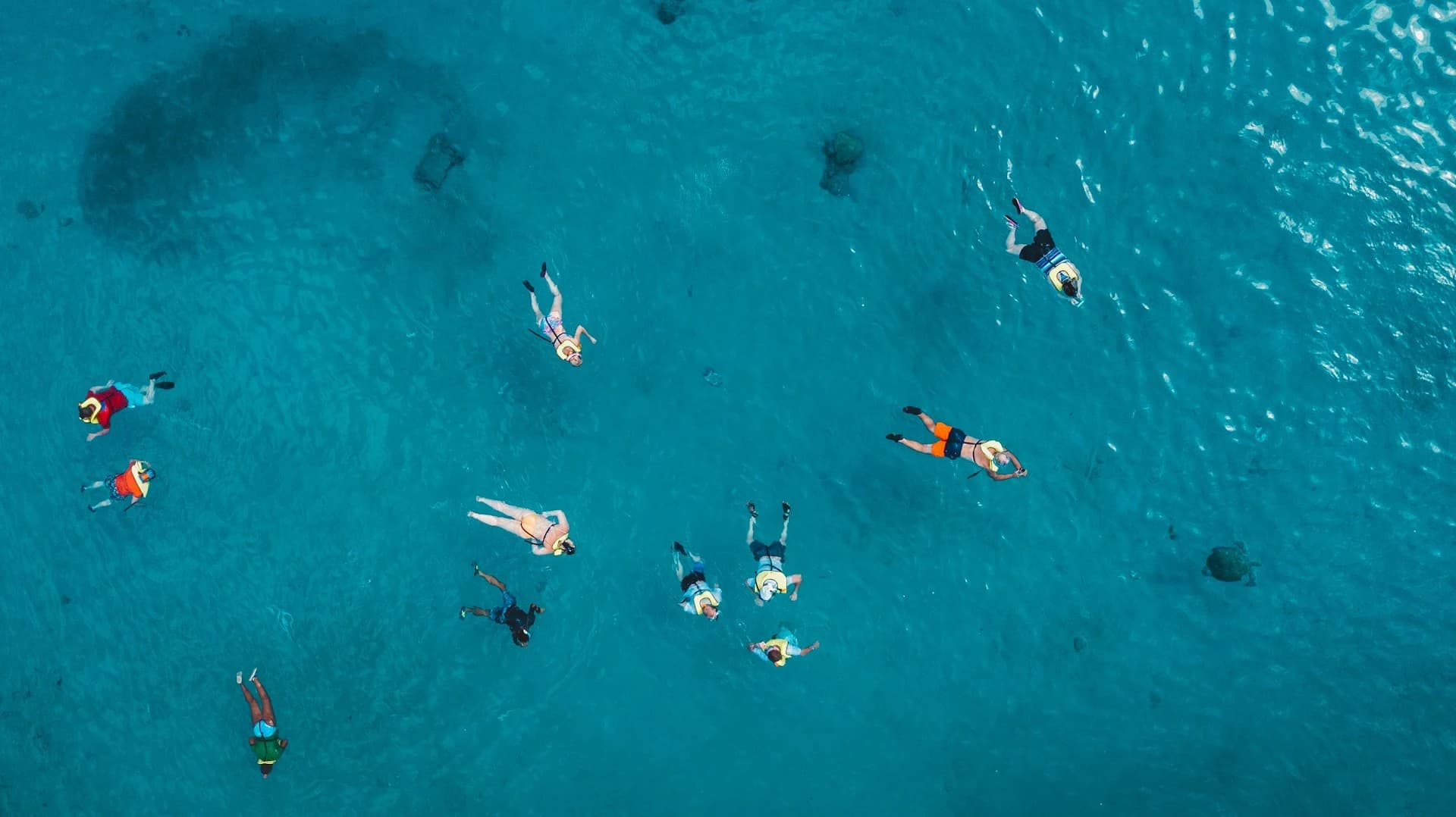
- Beginners (no certification): Book a Discover Scuba experience. An instructor covers the basics in shallow, calm water, then guides you on a real but shallow dive the same day, usually in the Marine Park. No certification or prior experience is required, and it is the best way to try diving before committing to a course. Minimum ages and basic health requirements apply, so check the operator's conditions.
- Want to get certified in Cabo? Several shops run full PADI Open Water courses over a few days. If you are short on time, what we'd suggest is doing the online theory before you arrive, so your in-water days are spent diving rather than studying.
In our experience, the most common mistake is booking a certified trip when your card is buried at home or your last dive was years ago. If either is true, tell the operator in advance and consider a refresher; it makes the whole day smoother and safer.
Most Popular Tours
Almost all diving in Cabo and the wider Los Cabos area happens in two zones a short boat ride from the Cabo San Lucas marina: the Marine Park around Land's End, and the Corridor sites between Cabo San Lucas and San José del Cabo. The map above plots every site; below is a site-by-site breakdown of each one, what you see there, and the experience level it suits.
Cabo San Lucas Marine Park (Land's End)
The protected bay right under El Arco is where most trips dive, and it is genuinely good. Most people don't realize how busy this water gets, since the same sites draw snorkel boats, glass bottom tours, and other watercraft, so an early dive beats the traffic. These are the headline sites inside the park.
Pelican Rock
Pelican Rock is the most dived site in Cabo and the one nearly every trip starts with. It sits at the base of Land's End directly below El Arco, where a sandy slope falls from around 20 feet down past 100 feet alongside a rock wall, so the same site serves a Discover Scuba first-timer in the shallows and a certified diver following the wall deeper. The reef is thick with tropical fish: king angelfish, parrotfish, sergeant majors, pufferfish, and schooling grunts, with moray eels tucked into the rocks and rays cruising the sand below. Because it is sheltered and shallow, visibility holds up even when the outer sites are rougher, which is why it is the default for beginners and refresher dives. The trade-off is traffic, since Pelican Rock is also the busiest snorkel spot in the bay, so a morning dive before the snorkel boats arrive is noticeably calmer and clearer. Curious sea lions from the nearby colony often pass through.
Neptune's Finger and the Sand Falls
Neptune's Finger is the signature Cabo dive: a rock pinnacle that rises toward the surface and then drops as a wall into deep blue water, named for the finger-like spire of rock. It lies just around the point from Pelican Rock and is usually the second dive of a 2-tank trip. The headline attraction is the famous sand falls, rivers of sand that spill over the lip of the wall and cascade down the slope into the depths, a phenomenon Jacques Cousteau filmed here and one of very few places on earth you can watch it happen. The wall is dressed in sea fans and invertebrate life, with schooling fish along the drop-off and larger pelagics passing in the blue on the better days. Depths run from about 40 feet to well past recreational limits, so it suits certified Open Water divers and up rather than beginners, and current along the wall can make it a more advanced profile than Pelican Rock.
North Wall
North Wall is the steeper and more dramatic of the two main wall dives inside the Marine Park, dropping sharply from the shallows into deep water along the Land's End rock formation. It is a certified-diver site, and the appeal is the vertical structure: the bigger fish that patrol the drop-off and the sensation of flying along a sheer face rather than finning over a reef. Expect schooling jacks and snappers, moray eels in the cracks, and rays over the sand at the base, with sea lions a regular sight given the colony sits at the same headland. Visibility is usually strong here because the wall is near the mouth of the bay where cleaner Sea of Cortez water moves through, though that same exposure means current is more of a factor. Most operators run North Wall as part of a 2-tank or 3-tank certified trip rather than for first-timers, and it pairs naturally with Neptune's Finger on the same outing.
Middle Wall
Middle Wall sits between Pelican Rock and the outer Land's End walls, with a gentler wall-and-slope profile that bridges the easy and advanced ends of the Marine Park. It works well as a second dive for newer certified divers who want some wall structure without the depth and current of North Wall or Neptune's Finger. The terrain mixes boulders, ledges, and sand channels that hold the same reef-fish community as the rest of the bay, plus the chance of rays, turtles, and passing sea lions. Because it is a little more sheltered, it is a common fallback when conditions on the outer walls are too rough, and it is often paired with Pelican Rock for a relaxed two-dive morning. Visibility is typically good, in the 40 to 80 foot range depending on the season.
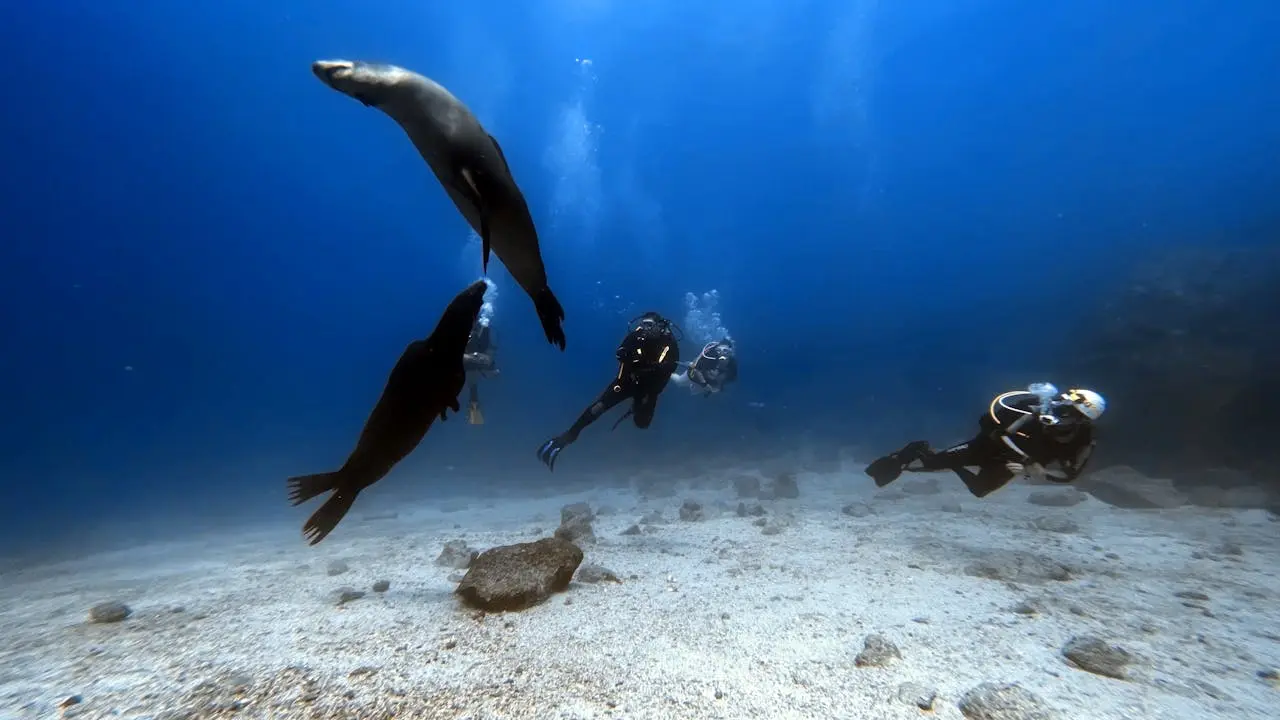
Land's End and the Sea Lion Colony
Land's End is the rocky point where the Sea of Cortez meets the Pacific, and the resident California sea lion colony here is the wildlife highlight of diving in Cabo. The animals haul out on the rocks at the very tip, and a curious few almost always come down to investigate divers and snorkelers, year-round, with no season to plan around. Diving the area around the colony combines the structure of the surrounding walls and pinnacles with the chance of close, playful sea lion encounters, which for many divers is the most memorable part of the day. It is an easy boat ride from the marina and overlaps with Pelican Rock and the wall dives, so most trips touch this zone in some form. Keep a respectful distance and let the animals come to you rather than chasing them.
The Corridor: Santa María and Chileno
A bit further out along the coast toward San José del Cabo, the Corridor reefs at Santa María Bay and Chileno Bay offer rockier reef, more hard and soft coral, and often clearer water than the inner bay. These protected coves see less boat traffic than Land's End and tend to have calmer, shallower profiles, which makes them good for newer certified divers and for groups mixing divers and snorkelers. Marine life includes green sea turtles, eagle rays, octopus, moray eels, pufferfish, and dense schools of tropical fish over the reef. They feature on 3-tank trips and on some 2-tank itineraries when conditions favor heading east. These are the same bays that anchor our Cabo snorkeling guide, so divers and snorkelers in one group can both have a good day on a single trip.
Gordo Banks and Offshore Sites
For experienced divers, Gordo Banks is the big-animal site in the region: a pair of seamounts roughly eight miles offshore from San José del Cabo, with the shallower bank topping out around 110 feet. This is advanced, current-prone, deep diving for certified divers with the right experience, not a casual outing. The reward in the warmer months, roughly August through November, is pelagic action: schooling jacks and tuna, mobula rays, and sharks including the hammerheads the banks are known for. Because of the depth, current, and offshore boat ride, Gordo Banks runs as a dedicated trip in settled conditions rather than a standard bay dive, and operators screen divers before taking them out. The specialty shark dives also work this offshore zone. From what we've seen in reviews, the bigger animals show up on the better days, so go with realistic expectations and flexible dates, and treat a Gordo Banks day as weather-dependent.
You will also see Cabo Pulmo called the best diving in the region, and it often is. It is a separate day trip well up the East Cape rather than one of the in-bay dives above, so we break down exactly how it compares in the next section.
Most Popular Tours
Cabo Pulmo vs Cabo San Lucas Diving: Which Should You Choose?
If you are researching scuba diving in Cabo, Mexico, you will quickly run into Cabo Pulmo, often called the best diving in all of Baja. It is a fair claim, but Cabo Pulmo is a very different trip from diving the Cabo San Lucas Marine Park, and the two suit different travelers. Here is how Sea of Cortez diving at each one compares.
| Factor | Cabo San Lucas (Marine Park) | Cabo Pulmo National Park |
|---|---|---|
| Distance from Cabo San Lucas | 5 to 15 min boat from the marina | About 2 to 2.5 hr drive up the East Cape |
| Setting | Rocky walls, pinnacles, sand falls, sea lion colony | The only hard-coral reef in the Sea of Cortez (UNESCO site) |
| Marine life | Reef fish, rays, turtles, sea lions year-round; sharks offshore Aug–Nov | Huge schools of jacks and grouper, sea turtles, mobula rays, bull sharks in winter |
| Reef quality | Rocky reef and dramatic walls; little hard coral | Living reef roughly 20,000 years old, the healthiest in the gulf |
| Difficulty | Beginner to advanced; Discover Scuba available | Mostly easy to moderate, but a committed full day |
| Logistics | Half-day; dive in the morning, keep your afternoon | Full day; early start, long drive, strict park rules and limited permits |
| Best for | First-timers, short trips, convenience | Certified divers chasing world-class reef and big schools |
Choose Cabo San Lucas if...
You want to dive without losing a whole day. The Marine Park sites sit minutes from the marina, Discover Scuba lets total beginners dive the same day, and you can be back on the beach by lunch. For a short trip, a first dive, or a mix of certified and non-diving travelers, the convenience plus the sea lion colony at Land's End make Cabo San Lucas the sensible call. It is also the better base if you want variety across 2-tank and 3-tank trips, private boats, and a specialty shark dive without long drives.
Choose Cabo Pulmo if...
Reef quality is your priority and you have a full day to give it. Cabo Pulmo protects the only living hard-coral reef in the Sea of Cortez, and decades of no-take protection have made its fish biomass some of the densest in the region: tornado-like schools of bigeye jacks, large grouper, turtles, and bull sharks gathering in winter. It is a national park with strict rules and a capped number of daily divers, reached by a drive of more than two hours up the East Cape, so most people go with an operator that handles transport and permits. The diving itself is mostly gentle, which keeps it accessible, but the day is long.
One more option sits in between: the Los Cabos diving scene extends north to La Paz, about two hours away, where sea lion colonies, seamounts, and shipwrecks make another excellent full-day trip. Our La Paz scuba diving guide covers those sites in detail. Many divers combine a couple of convenient mornings in the Cabo San Lucas Marine Park with one big day trip to Cabo Pulmo or La Paz, getting the best of both.
Best Time to Scuba Dive in Cabo
You can dive in Cabo year-round, but the water and visibility change a lot with the season, and so does the marine life. Here is how the year breaks down for divers.
| Season | Water Temp | Visibility | Diving Notes |
|---|---|---|---|
| Aug–Nov (best) | ~28–30°C (82–86°F) | Best of the year | Warm, clear water; mobula rays, schooling fish, and the best shark odds offshore |
| May–Jul | ~24–28°C (75–82°F) | Good and improving | Warming up; comfortable diving and building marine life |
| Dec–Apr | ~20–23°C (68–73°F) | Lower, more variable | Cooler water (thicker wetsuit), but humpback whales are often heard underwater Dec–Mar |
Cabo Marine Life Calendar
What you see underwater shifts through the year. This is the rough calendar for the headline species divers ask about in Cabo and the wider Sea of Cortez:
| Marine Life | Best Months | Where |
|---|---|---|
| Sea lions | Year-round | Land's End colony |
| Reef fish and rays | Year-round | Marine Park and Corridor |
| Sea turtles | Year-round, peak Jul–Nov | Corridor reefs |
| Mobula rays | May–Nov | Bay and offshore |
| Sharks (incl. hammerheads) | Aug–Nov | Gordo Banks, offshore |
| Humpback whales (heard underwater) | Dec–Mar | Throughout |
| Whale sharks (La Paz day trip) | Oct–Apr | La Paz, ~2 hr north |
The headline is simple: late summer and fall (roughly August to November) are the best months to dive in Cabo, with the warmest, clearest water and the most big-animal action. Winter still delivers good diving, especially around Land's End, but bring a thicker wetsuit and set expectations for cooler, slightly murkier water. Whatever the month, the water at depth runs colder than the surface, often into the low-to-mid 60s°F below the thermocline, so a 5 to 7mm wetsuit, with a hood if you feel the cold, is the safe call. We'd plan a dedicated dive trip for the August to November window if you can, and treat winter diving as a worthwhile add-on to a trip you are taking anyway rather than the reason to come. Mornings are calmest year-round, so early dives generally mean better conditions. For the wider seasonal picture, see our Cabo in summer guide.
Most Popular Tours
What to Expect Diving in Cabo
- Getting there: Most trips meet at the dive shop or the Cabo San Lucas marina; some include hotel pickup, others ask you to make your own way. The dive sites are a short boat ride away, so you are usually underwater within 15 to 30 minutes of leaving the dock.
- The format: Certified 2-tank trips are typically half-day mornings with a surface interval between dives; 3-tank trips are full days. Discover Scuba experiences start with a briefing and shallow-water skills, then one guided dive.
- Gear: Tanks, weights, and a guide are standard; full rental gear (BCD, regulator, wetsuit, mask, fins) is usually available, sometimes included and sometimes an add-on that commonly runs about $38 to $40 per person per day, so confirm what is bundled when you book.
- Conditions: Visibility and water temperature vary by season, and even from one dive to the next, and some offshore sites have current. Water that feels warm at the surface can drop into the low-to-mid 60s°F below the thermocline, so suit for the depth. The protected Marine Park sites around Land's End are the calmest and most beginner-friendly.
- Marine life: Expect reef fish, rays, eels, and the Land's End sea lions year-round, with mobula rays, turtles, and seasonal sharks adding to it in the warmer months.
Our experience (dive early): Cabo's wind and boat traffic build through the day, so the first departures get the calmest water and the best visibility. Booking a morning dive is the single easiest way to improve your day underwater.
Our experience (confirm the gear): The biggest price-and-comfort variable between operators is what is included. Check whether full rental gear and a wetsuit suited to the season are bundled or extra before you compare prices, since a cheap dive can end up costing more once you add equipment.
How Much Does Scuba Diving in Cabo Cost?
Scuba diving in Cabo San Lucas costs about $129 to $210 per person for shared trips, with private boats and specialty dives costing more. What you pay depends mostly on the number of tanks, whether the trip is private, and whether full gear is included. Check current prices to compare what is available on your dates.
A 2-tank Marine Park dive runs roughly $129 to $149 per person; the 3-tank Reserve and Corridor day is $210. These are the best value per dive for certified divers.
A shared Discover Scuba experience is about $129 to $143 per person; a private beginner lesson is around $175. No certification needed.
A private dive boat is from $545 for up to four (about $136 each for a foursome), and the guided shark dive is around $205 per person.
Budget for extras too: full rental gear or a thicker winter wetsuit if not included, the Marine Park fee where it is charged separately, and a tip for the crew. For most certified divers we'd shortlist the $142 Manta 2-tank for value or, for a foursome, the private boat to bring the per-person cost down with a private guide.
Most Popular Tours
Pairing Scuba Diving with Other Cabo Experiences
A half-day dive leaves your afternoon and evening free, so it pairs easily with the rest of Cabo. Because dives launch from the marina, the simplest combinations are on the water: a snorkeling tour at Pelican Rock or Chileno for non-diving members of your group, or a glass bottom boat tour to El Arco that covers the same Land's End sights from the surface.
From December to April, divers often add a morning whale watching tour, since the same humpbacks you hear underwater are easy to see from a boat. For a relaxed end to a dive day, an evening sunset cruise rounds out the time on the water. And if you catch the dive bug, the world-class reefs of Cabo Pulmo and the sea lions, seamounts, and wrecks around La Paz make a natural next trip. See our things to do in Cabo San Lucas guide and our Cabo San Lucas itinerary guide to build out the rest of the trip.
From Our Experience
We've found the most common surprise in Cabo is the cold: the surface can feel warm, but the water at depth often drops into the low-to-mid 60s°F below the thermocline, so renting a thicker wetsuit, a 5 to 7mm with a hood if you feel the cold, makes the difference between a great dive and one cut short.
Tips for Scuba Diving in Cabo San Lucas
- Dive in the morning: Wind and chop build through the day, so the earliest trip is almost always the calmest and clearest.
- Bring your certification card: Certified trips require proof of certification, and operators may ask when you last dived. If it has been a while, mention it and consider a refresher.
- Beginners: book Discover Scuba, not a certified trip: If you have never dived, the Discover Scuba experience is designed for you, with an instructor and shallow, calm water; certified trips assume you can dive independently.
- Confirm what gear is included: Tanks and weights are standard, but full rental gear and a season-appropriate wetsuit may be extra, often about $38 to $40 per person per day, which changes the real price.
- Suit for the depth, not the surface: Even when the boat ride feels warm, water below the thermocline can sit in the low-to-mid 60s°F, so a 5 to 7mm wetsuit, and a hood if you get cold, keeps the dive comfortable. Ask the operator what they recommend for your dates.
- Beginners, ask about a second dive: Many Discover Scuba experiences add an optional second dive for around $45, and the second site is often where the best marine life is.
- Time your trip for August to November if you can: The warmest, clearest water and the best marine life, including the best shark odds offshore, fall in late summer and autumn.
- Going private with a group of four? A private dive boat can match the per-person cost of a shared trip while giving you a private guide and a flexible plan.
- Confirm a WhatsApp or phone contact and your meeting point: Pre-trip messaging is the most common weak spot in reviews, so lock in how to reach the shop and where to meet before the day.
- Mind the no-fly rule: Do not dive on your last day before flying home; leave at least 18 to 24 hours between your final dive and your flight.
- Want world-class reef? Plan Cabo Pulmo or the diving around La Paz as a separate day trip rather than expecting it from an in-bay Cabo San Lucas dive.
Most Popular Tours
How We Selected These Tours
The Cabo Tour Guides team compared the bookable scuba diving trips operating out of the Cabo San Lucas marina on the factors that actually shape a dive day: price per person and per dive, the number of tanks, whether the trip is shared or private, the certification level required, the dive sites visited, and verified ratings and review volume. We included both the large, polished operators and the smaller, highly rated dive shops, and split the list clearly between certified trips and beginner Discover Scuba experiences so you can book the right one for your level. We also flagged the things that catch divers out: gear that is sometimes extra, cooler winter water, and the fact that the famous Cabo Pulmo reef is a separate day trip rather than an in-bay dive. Ratings and review counts reflect each operator's verified booking record. Where a trip is rated on Google rather than the booking platform, we have noted it so you can weigh the numbers accordingly.
Frequently Asked Questions
Is Cabo San Lucas good for scuba diving?+
Yes. Cabo San Lucas has accessible, varied diving in the protected Marine Park right around Land's End, a short boat ride from the marina, with reef, walls, the famous sand falls, and a resident sea lion colony. Water is warmest and clearest from August through November. For world-class reef, Cabo Pulmo and the diving around La Paz are a separate day trip.
Do you need to be certified to scuba dive in Cabo?+
No. Certified divers (Open Water and up) book 2-tank, 3-tank, private, or specialty trips, but complete beginners can book a Discover Scuba experience, where an instructor teaches the basics in shallow water and guides you on a real dive the same day, with no certification or prior experience needed.
How much does scuba diving in Cabo cost?+
Shared trips run about $129 to $210 per person: roughly $129 to $149 for a certified 2-tank dive, $210 for a 3-tank day, and $129 to $143 for a beginner Discover Scuba. Private dive boats start around $545 for up to four, and a specialty shark dive is about $205 per person. Confirm whether full gear is included, as that changes the real price.
Where do you scuba dive in Cabo San Lucas?+
Most dives are in the Cabo San Lucas Marine Park around Land's End, at sites like Pelican Rock, Neptune's Finger with its sand falls, and the North and Middle Walls, plus the resident sea lions. Corridor reefs such as Santa María and Chileno feature on 3-tank and some 2-tank trips, and advanced divers can reach offshore sites like Gordo Banks.
What is the best time of year to dive in Cabo?+
Late summer and autumn, roughly August through November, are the best months: the water is warmest at 78 to 85°F and visibility is at its best, with the most marine life including the best shark odds offshore. Winter still has good diving but cooler, slightly murkier water, and humpback whales are often heard underwater from December to March.
Can beginners scuba dive in Cabo San Lucas?+
Yes. Beginners book a Discover Scuba experience: a PADI instructor covers the basics in calm, shallow water, then guides you on a real but shallow dive in the Marine Park the same day. No certification or experience is needed. Minimum ages and basic health requirements apply, so check the operator's conditions when booking.
Can you dive with sharks or sea lions in Cabo?+
Yes. The Land's End sea lion colony is resident year-round and curious sea lions often join divers. For sharks, a specialty guided shark dive works the offshore waters off Los Cabos, and the Gordo Banks seamounts draw sharks including hammerheads in the warmer months; both are advanced, weather-dependent dives best suited to confident certified divers.
Is Cabo Pulmo part of scuba diving in Cabo San Lucas?+
Not directly. Cabo Pulmo is a protected national park with the only hard-coral reef in the Sea of Cortez, but it sits up the East Cape, well outside Cabo San Lucas, so it is a separate, longer day trip rather than one of the in-bay dives. The trips compared in this guide dive the Cabo San Lucas Marine Park and the Corridor.
Cabo Pulmo vs Cabo San Lucas: which is better for diving?+
It depends on your priorities. Cabo San Lucas wins on convenience: the Marine Park is a 5 to 15 minute boat ride, beginners can dive the same day, and you keep your afternoon. Cabo Pulmo has the better reef, the only living hard-coral reef in the Sea of Cortez with dense fish schools and wintertime bull sharks, but it is a full-day trip more than two hours up the East Cape. Many divers do both: easy mornings in Cabo, one big day at Cabo Pulmo.
Are there PADI dive shops in Cabo San Lucas?+
Yes. Several established dive shops operate out of the Cabo San Lucas marina, including PADI centers that run certified 2-tank and 3-tank trips, private boats, Discover Scuba intros for beginners, and full PADI Open Water certification courses. If you want to certify in Cabo, doing the online theory before you arrive frees your in-water days for diving.
Is the Sea of Cortez good for scuba diving?+
Very. Jacques Cousteau called it the world's aquarium for good reason: the Sea of Cortez around Los Cabos mixes rocky reef, walls, and seamounts with sea lions, rays, turtles, schooling fish, and seasonal sharks and whales. Cabo San Lucas offers the most convenient access, while Cabo Pulmo and La Paz add world-class reef and big-animal diving on a day trip.
Affiliate note: Some links on this page are affiliate links. If you book through them, we may earn a small commission at no additional cost to you.